Susan Bustamante has made this trip before — and she’s prepared to make it again.
The 71-year-old Orange County woman, once sentenced to life in prison, has traveled repeatedly to the state Capitol to press lawmakers to pass legislation she believes could offer relief to other domestic violence survivors ensnared in the criminal justice system. Each of the past three years, the bill has cleared initial committee hurdles before quietly dying behind closed doors.
This year, Bustamante is hoping for a different outcome.
The proposal, opposed by police and prosecutor groups statewide, would let survivors of human trafficking, intimate partner abuse or sexual violence introduce their history of victimization as a legal defense when charged with violent crimes — with an exception for most homicide cases. People already convicted of qualifying offenses could also ask a judge to throw out their convictions entirely. If granted, the arrest and conviction would be wiped from the record, court files sealed and destroyed, and any outstanding fines or restitution forgiven.
“I’m willing to fight for those who are not in the position that I am right now to be able to open my mouth and … fight for this,” Bustamante said in an interview last week.
Her own case illustrates why she’s become such a persistent advocate. In 1987, Bustamante was sentenced to life without parole after prosecutors accused her of hiring her brother to kill her husband, Steven Bustamante, and helping conceal his death in exchange for a $100,000 life insurance payout split between the siblings. She said she was never permitted to tell the jury, during a trial that lasted only two days, that her husband had repeatedly beaten her and threatened her life.
“The idea that he would kill Steven never occurred to me,” Bustamante told state lawmakers last month. “Later, he called me to say that Steven was dead. He threatened to call the police and say I planned it. He blackmailed me for Steven’s insurance. I was afraid of having my daughters taken from me, so I gave in.”
Then-Gov. Jerry Brown commuted her sentence in 2017 after reviewing her case and her clean disciplinary record behind bars. She was released the following year, after three decades in prison. Notably, Bustamante said she would not even qualify for relief under the bill she’s championing — she’s pushing for it purely on behalf of others.
Current California law already permits defendants to present evidence of past abuse and call expert witnesses to explain its psychological effects, and judges may weigh a defendant’s history of trafficking or domestic violence at sentencing. The new measure would go further, allowing that history to serve as an actual defense against violent crime charges. State law already extends similar post-conviction relief to people convicted of nonviolent offenses.
Since Bustamante first testified in Sacramento in 2023, versions of the bill have cleared one of the Legislature’s two public safety committees each year, only to be quietly shelved by one of the chamber’s appropriations committees — panels that meet twice yearly to dispose of hundreds of bills without public debate. As CalMatters has previously reported, these committees are often where powerful interest groups, the governor’s office and state agencies exert influence behind the scenes, and where legislative leaders sometimes bury bills they’d rather not oppose publicly.
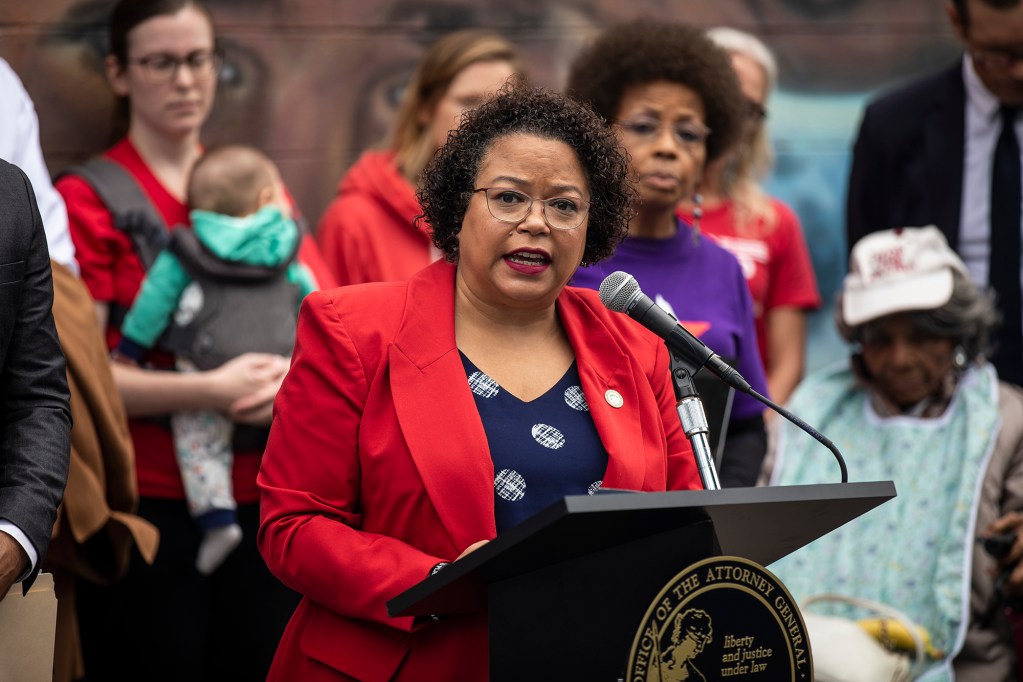
This year’s version, Assembly Bill 910, authored by Assemblymember Mia Bonta, an Oakland Democrat, is scheduled to go before the Senate Appropriations Committee next month. The panel’s new chairperson, Sen. Sabrina Cervantes of Riverside, declined to comment through a spokesperson.
Law enforcement groups remain firmly opposed. They warn the bill could open the door for violent offenders — including those convicted of rape, kidnapping and child molestation — to flood California’s already strained courts with petitions seeking to erase their convictions. Critics see it as another example of what they describe as a broader push by progressive lawmakers to soften consequences for serious crimes, often, they argue, at victims’ expense.
“To basically allow them to walk away from a violent crime in terms of accountability is just absurd policy,” said Greg Totten, former Ventura County district attorney and current head of the California District Attorneys Association. Totten pointed out that defendants already have avenues to raise abuse claims during sentencing.
Bonta did not respond to a request for comment, but told the Senate Public Safety Committee last month that the bill represents “a second chance… a dignity bill,” adding, “Survivors should not spend their lives paying for abuse they endured.”
At least 17 organizations have backed the measure, including ACLU California Action and the San Francisco Public Defender’s Office, according to CalMatters’ Digital Democracy database. Supporters contend that very few people convicted of violent offenses would actually meet the bill’s narrow qualifying criteria, and that for the handful who do, helping them shed felony records that hinder employment and housing would ultimately save taxpayer money.
“If even one person is granted relief under this bill, it will pay for itself,” said Leigh LaChapelle, director of policy and advocacy for the Coalition to Abolish Slavery and Trafficking.
Whether the measure survives this year’s appropriations process — where it has died three times before — remains uncertain. But for Bustamante, the fight isn’t over.
Original source: CalMatters