Should California welcome grizzly bears back to the wild? Lawmakers want to find out — and the idea is drawing sharp lines between the state’s cities and its rural backcountry.
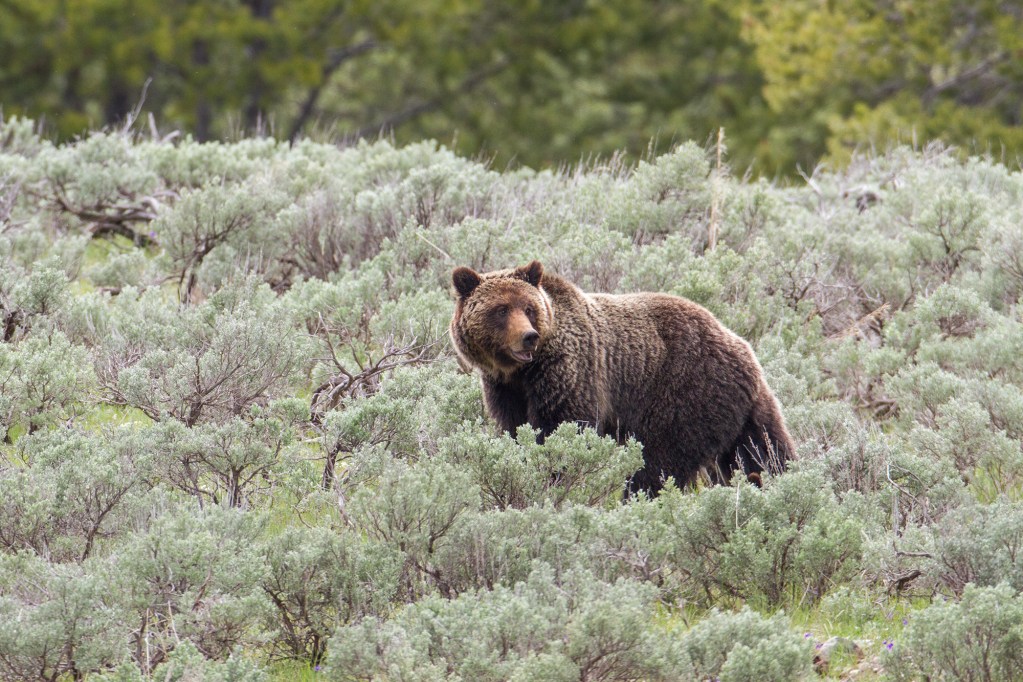
California hasn’t seen a wild grizzly in more than 100 years, even though the animal remains front and center on the state flag. Before the Gold Rush era, an estimated 10,000 grizzlies roamed the state. Settlers hunted the species to extinction here, and now a group of Democratic legislators is pushing to study whether the bears could ever return.
The proposal, which has already cleared the state Senate and is now before the Assembly, wouldn’t reintroduce grizzlies outright. Instead, it would direct the California Department of Fish and Wildlife to study the feasibility of bringing the apex predator back to the landscape.
Supporters include tribal nations, conservation groups and animal welfare advocates, who argue that grizzlies play a vital role in balancing ecosystems and that their disappearance left a lasting scar on California’s natural heritage.
Tiana Williams-Claussen, who directs the Yurok Tribe’s wildlife department, said the loss of the grizzly has had ripple effects that go far beyond biology. “I can see the ways in which my homeland has suffered from the loss of iconic species such as the grizzly, and that this loss lingers in our heart and in the attenuation of a millennia-old relationship,” she said.
Notably, the bill’s author and its coauthors all represent urban districts in Southern California — a detail not lost on critics in the state’s rural regions, where opposition runs deep.
Ranchers, hunting organizations and many rural residents argue the idea is unrealistic and potentially dangerous, especially in communities already dealing with growing conflicts involving mountain lions and wolves. Nearly every Republican in the state Senate voted against the bill.
Some opponents also raise concerns about fairness to the bears themselves. Elizabeth Washoe, a Native American resident of Modoc County, said uprooting grizzlies from their current habitats to place them in a dramatically altered California landscape would do the animals no favors.
“Where they’re at, they’re living a pretty good life, and we’d take them and put them here in a landscape that is so dramatically changed from what it was the last time that the bears were truly living a good life here,” Washoe said. “It feels egotistical.”
For now, the debate remains a study proposal rather than a concrete reintroduction plan — but it has reignited a long-simmering divide between California’s urban and rural communities over how to manage, and remember, the wild spaces that once defined much of the state.
In other news from across the state:
A federal appeals court has thrown out the fraud conviction of a man once at the center of a $1 million COVID-relief scheme tied to a state-funded parolee rehabilitation program. Attila Colar ran a rehab home called All Hands on Deck, which was the focus of a 2023 investigation revealing California had spent hundreds of millions of dollars on similar programs without tracking whether they actually helped participants find work or avoid reoffending.
The 9th Circuit Court of Appeals ruled this week that the trial judge should have removed a juror who expressed clear bias against Colar, who is Black and Muslim and represented himself for part of the trial. That juror said Colar’s comments amounted to little more than “discrimination, conspiracy theories, and police corruption,” language the appeals court said reflected personal bias the juror admitted he could not set aside.
Meanwhile, a fight is brewing over $200 million in unspent state funds originally intended to help schools install or upgrade air conditioning and heating systems. School officials argue the money was promised to campuses under a 2020 program funded by utility company fees and should be released to finish the work. Torrance Unified School District’s deputy superintendent, Keith Butler, called the funding freeze “unjustifiable,” saying the district simply wants to complete projects that were already underway.
Consumer advocates, however, contend the money should instead be refunded to utility customers whose bills rose to pay for a program the state ultimately shut down.
And in the Inland Empire, outgoing Cal State San Bernardino President Tomás Morales is set to receive a $340,000 salary in a new advisory role with the university system as he steps down from his current post. Morales had been a central figure in a $12 million legal settlement after two former female administrators accused him of gender discrimination and retaliation.
Original source: CalMatters