
Lawmakers stripped the Board of Equalization of power. Now they’re fighting to join it

Date:

Nearly a decade after California lawmakers sharply reduced the power of the state Board of Equalization, the once-dominant tax agency is again attracting serious political interest — including from sitting state legislators seeking its elected seats.

Three current state lawmakers are running this year for the Board of Equalization, the nation’s only elected tax board. They are part of a field of roughly two dozen candidates pursuing the board’s four district-based seats.

The office has long served as a steppingstone in California politics. Fiona Ma held a seat before becoming state treasurer, while Betty Yee and Malia Cohen served on the board before winning election as state controller.

The Board of Equalization dates to an 1879 constitutional amendment that created it to make county property tax assessments more consistent across California. Over time, the agency grew far beyond that original mission, eventually collecting about one-third of the state’s tax revenue and hearing appeals from taxpayers and businesses disputing tax bills.

Governors from both parties tried unsuccessfully to eliminate the board, including Pete Wilson and Arnold Schwarzenegger. But the agency survived until 2017, when allegations that board members had used public resources to promote themselves led to a state audit and major legislative action.

Then-Gov. Jerry Brown signed a law that stripped the board of most of its authority, leaving it with only the responsibilities spelled out in the state Constitution. The law also created two new departments under the governor: one to collect sales and use taxes and another to handle taxpayer appeals.

After the reorganization, Board of Equalization races became far less prominent. Ted Gaines, a former Republican lawmaker from the Sacramento area, won a seat. Former Democratic Assemblymember Sally Lieber also joined the board and is now seeking reelection. Other current members came from local government rather than the state Capitol.

Lieber, who represents District 2, a 19-county region centered on the Bay Area, said the board still serves a meaningful purpose.

“We’re lean but we’re not mean,” Lieber said. “I think the Board of Equalization is the right size in the system right now. I do really believe that the board has a role to play in being a forum for taxpayers to come forward to.”

This year’s races are expected to be more competitive.

In District 1, which covers inland California, Republican state Sen. Shannon Grove of Bakersfield enters the race with more than $900,000 in her campaign account and name recognition built through service in the Legislature since 2010. Democrats are also contesting the seat, with Fresno City Councilmember Nelson Esparza running with party support.

In District 2, Lieber faces San Mateo Community College District Trustee John Pimentel. Lieber has the state Democratic Party’s endorsement, while Pimentel has support from several Bay Area Democratic figures, including Treasurer Ma and San Jose Mayor Matt Mahan.

In District 3, which represents the Los Angeles area, former Monterey Park City Councilmember Yvonne Yiu has contributed $760,000 of her own money to the campaign and has about $1 million available. She faces Assemblymember Mike Gipson, a Gardena Democrat who has served in the Legislature since 2014.

District 4, which includes the San Diego region and parts of Southern California, has drawn a crowded field. Candidates include Democratic state Sen. Tom Umberg of Santa Ana, San Ysidro school board member Martín Arias, San Diego Unified School District board member Cody Peterson and Republican Denis Bilodeau, who is backed by Assemblymember Carl DeMaio’s Reform California organization.

Taxpayer advocacy groups have long supported the board because it provides an elected forum focused specifically on tax issues.

“It’s a very useful elected body that answers to the voters,” said Susan Shelley, vice president of communications for the Howard Jarvis Taxpayers Association.

Some candidates say the downsized agency could still do more for Californians.

Arias said the board should play a larger role in helping homeowners and prospective homeowners understand the system. As a taxpayer advocate in the San Diego County Assessor’s Office, he said he works with the Board of Equalization regularly.

“I think there’s a bigger opportunity here to make the Board of Equalization the constitutional office that it is — that it should be,” Arias said. “There’s a clear opportunity here for us to start advocating at the state level for all of our taxpayers, including those that don’t speak English.”

Umberg said he wants the board to have stronger investigative authority and more resources, particularly when overseeing county property tax assessors. He pointed to past felony cases involving assessors in San Bernardino and Los Angeles counties as examples of why oversight matters.

“Although it’s not a high-profile job, it’s a critically important job, especially when we’ve got so many revenue challenges in California,” Umberg said in an interview with CalMatters.

Not everyone agrees the board should continue to exist. Yee, who served on the Board of Equalization from 2004 to 2014, has called for abolishing it entirely. She argues its remaining duties could be handled by another state department or agency.

“I just really do question how this board continues to have relevance,” Yee told CalMatters. “I sometimes feel like the board is really doing a lot of work in search of finding problems to solve. I know with each of the board members, they feel very strongly about being a taxpayer advocate. But frankly, every public official should be a taxpayer advocate.”

Democratic lawmakers did not eliminate the board in 2017 because doing so would have required voter approval.

Mark DeSio, a former communications director for the board, said lawmakers should have gone further.

“They should have just chopped the head of the snake off and done away with the Board of Equalization altogether,” DeSio said. “They didn’t do that. They left enough of the cancer to grow back.”

DeSio cooperated with the audits that found misspending intended to raise elected members’ profiles and widespread nepotism in hiring. He later lost his job during the reorganization and filed a whistleblower retaliation lawsuit against the state.

He said he believes some lawmakers are now drawn to the board because it offers visibility while they position themselves for future campaigns.

“That was the recipe for disaster a few years back,” DeSio said. “Somebody better watch these guys. They’re not there for the policy. It’s for the exposure.”

Original source: CalMatters
LEAVE A REPLY

Please enter your comment!
Please enter your name here

Share post:

Subscribe to The Hemet & San Jacinto Chronicle

Popular

More like this
Related

Lawmakers stripped the Board of Equalization of power. Now they’re fighting to join it

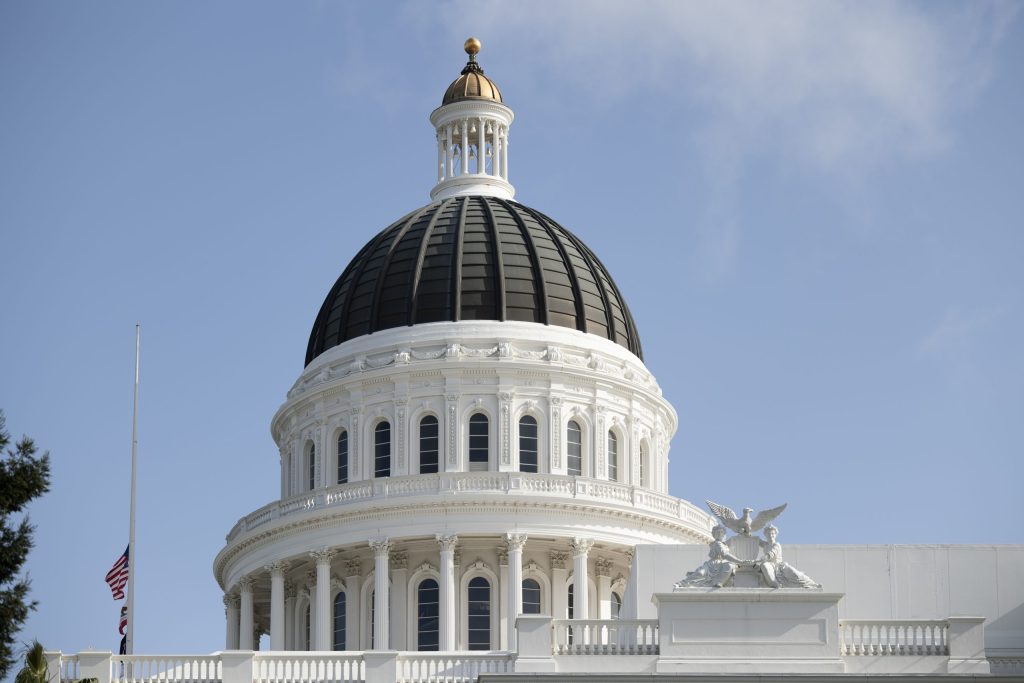
An outer view of a white and black semi-spherical dome that sits on top a white building decorated with various architectural details.

In summary

California’s Board of Equalization has a quirky history dating back to the 19th Century. It’s a launching pad to statewide political office, too.

California’s Board of Equalization is a coveted spot once again for state lawmakers looking for a new gig almost a decade after then-Gov. Jerry Brown signed a law gutting the organization of any serious governing responsibility.

This year, three current state lawmakers are competing for seats on the nation’s only elected tax board. They’re among some two dozen candidates on the ballot for its four elected positions, which are divided by geographic districts.

The board has long been a launching pad to higher offices in California politics — Fiona Ma served on it before becoming state treasurer, as did Betty Yee and Malia Cohen before each being elected state controller. 

The agency itself is a throwback to the 19th Century. It’s rooted in an 1879 constitutional amendment that created it and charged it with “equalizing” county property tax assessments statewide.

From that narrow mandate, it swelled to become a juggernaut that collected a third of the state’s tax revenue and provided a venue for people and businesses to contest their tax bills in front of the elected board. It survived numerous efforts by governors to kill it outright, including attempts by Pete Wilson and Arnold Schwarzenegger.

That is until 2017, when a cascade of allegations about board members misusing the office to promote themselves led to an authoritative state audit that lawmakers could not ignore

Brown signed a law stripping the agency of any powers beyond what voters gave it in 1879 and created two new departments that report to the governor instead of the elected board: one to collect sales and use taxes and another to hear taxpayer appeals. 

After that, Board of Equalization elections tended to be lower profile contests. Ted Gaines, a former Republican state lawmaker from the Sacramento area, won a seat. Former Democratic Assemblymember Sally Lieber is up for reelection on the board this year. The other members had experience in local politics instead of inside the Capitol. 

“We’re lean but we’re not mean,” said Lieber, the incumbent for District 2, which includes 19 counties centered on the Bay Area. “I think the Board of Equalization is the right size in the system right now…I do really believe that the board has a role to play in being a forum for taxpayers to come forward to.”

This year voters will see more contentious elections for the tax board:

  • In District 1 representing inland California, Republican state Sen. Shannon Grove of Bakersfield has more than $900,000 in a campaign account and name recognition from her representing the San Joaquin Valley in the Legislature since 2010. Democrats are putting up a fight for the district. Fresno City Councilmember Nelson Esparza is running with the party’s support.
  • In District 2 representing coastal California north of Los Angeles, incumbent Lieber faces San Mateo Community College District Trustee John Pimentel. Lieber has the Democratic Party’s endorsement, but a number of Bay Area Democratic leaders are backing Pimentel, including state Treasurer Ma and San Jose Mayor Matt Mahan.
  • In District 3 representing the Los Angeles area, former Monterey Park City Councilmember Yvonne Yiu put up $760,000 of her own money and has about $1 million on hand. The race has another heavyweight in Assemblymember Mike Gipson, a Democrat from Gardena who has served in the Legislature since 2014. 
  • District 4 representing the San Diego area has an especially crowded race with Democratic state Sen. Tom Umberg of Santa Ana, San Ysidro school board member Martín Arias, San Diego Unified School District board member Cody Peterson, and Denis Bilodeau, a Republican supported by San Diego Assemblymember Carl DeMaio’s Reform California organization.

A forum for California taxpayers

The board was always popular among taxpayer advocacy groups, who liked that it provided a forum to focus on tax issues in a capital where debates often center on labor and business.

“It’s a very useful elected body that answers to the voters,” said Susan Shelley, vice president of communications for the Howard Jarvis Taxpayers Association.

Some of this year’s candidates are thinking of ways to make the most of the agency.

Arias believes the board could do more to assist homeowners and potential homeowners. As a taxpayer advocate in the San Diego County Assessor’s Office, he says he works with the Board of Equalization every day and has a front seat to how the system works. 

“I think there’s a bigger opportunity here to make the Board of Equalization the constitutional office that it is — that it should be,” he said. “There’s a clear opportunity here for us to start advocating at the state level for all of our taxpayers, including those that don’t speak English.”

Umberg said he’d like the board to have more investigative power and resources. Citing instances in which San Bernardino and Los Angeles assessors have been arrested on felony charges, he said he’s most interested in the board’s oversight of property tax assessors. 

“Although it’s not a high-profile job, it’s a critically important job, especially when we’ve got so many revenue challenges in California,” Umberg said in an interview with CalMatters.

Questioning BOE’s relevance

Advocating for the board’s expansion has drawn criticism from former board members and employees. Yee, a board member from 2004 to 2014, has been vocal about abolishing the board entirely because she believes that its limited responsibilities could be easily transferred to another department or agency. 

“I just really do question how this board continues to have relevance,” she told CalMatters. “I sometimes feel like the board is really doing a lot of work in search of finding problems to solve. …I know with each of the board members, they feel very strongly about being a taxpayer advocate. But frankly, every public official should be a taxpayer advocate. ”

Democrats stopped short of killing the agency entirely because they would have had to put that question to voters. 

“They should have just chopped the head of the snake off and done away with the Board of Equalization altogether,” said Mark DeSio, a former communications director for the board. “They didn’t do that. They left enough of the cancer to grow back.”

He cooperated with the audit that revealed misspending at the agency that appeared intended to promote its elected members as well as another that showed widespread nepotism in its hiring practices. He then lost his job in the reorganization and filed a whistleblower retaliation lawsuit against the state.

DeSio believes lawmakers want seats on the Board of Equalization because it allows them to maintain a high profile until they can run for office again. 

“That was the recipe for disaster a few years back,” he said. “Somebody better watch these guys. They’re not there for the policy. It’s for the exposure.”

Cayla Mihalovich is a California Local News fellow.

Can CA help its workers survive the AI disruption?

CalMatters Chief Impact Officer Sisi Wei speaks with Cesar Fernandez, head of U.S. state and local government relations at Anthropic, at the CalMatters Ideas Festival at the Sheraton Grand Sacramento Hotel in Sacramento on May 21, 2026. Photo by Miguel Gutierrez Jr., CalMatters

Scheduling note: WhatMatters is taking Memorial Day off and will return to your inboxes on Tuesday.

Is artificial intelligence here to save us or destroy us all?

Like you, we don’t yet. But we heard from some smart people at our Idea Festival Thursday in downtown Sacramento, where one AI proponent tried to assuage public anxiety, and a labor leader argued California isn’t doing enough to protect workers.

Cesar Fernandez, the head of state and local government relations for the AI company Anthropic, said that while AI’s potential to undermine “democratic values” is something the company takes seriously, it also can be useful when safely and responsibly employed.

Fernandez pointed to Anthropic’s engagement with policymakers to explore how “overworked and underpaid” state workers can use AI, citing how California’s Department of Tax and Fee Administration uses Anthropic’s AI tool, Claude, to answer tax questions.

  • Fernandez: “This is an agency that receives more than 800,000 calls every single year. … By leveraging Claude in particular, the agency is seeing faster response times for residents seeking information, calls are even shorter, the quality of information is getting better. It’s enabling the same employees to do more.”

Anthropic is nearing a valuation of $1 trillion, according to the Financial Times.

Meanwhile, Gov. Gavin Newsom issued an executive order directing state agencies to reexamine California’s workforce policies in anticipation of the technology eliminating more jobs. The order calls for agencies to review policies that assist laid-off workers, create a dashboard on AI-related job loss and examine how unions are addressing AI in their labor agreements.

But Lorena Gonzalez, president of the California Federation of Labor Unions, at Ideas Fest called the order “lacking” because it makes no mention of guardrails to regulate AI’s effect on the workforce. 

Gonzalez noted various bills the federation put forward that Newsom vetoed, and said that accepting mass AI-related job loss as inevitable is “a political decision.”

  • Gonzalez: “Whether that’s in healthcare, behavioral health, journalism, teaching — there are some things we as a society can say we would never want those jobs replaced and done by a computer. … That’s not only an acceptable thing, that is something we should be doing for humanity.”

Overheard at Ideas Fest: Lincoln Project cofounder Mike Madrid made an election prediction: Democrats will pick up at least 25 seats in the U.S. House this fall and emerge with a Senate majority. By his read, the economy and President Donald Trump’s approval rating are insurmountable for the Republican party, even with all the gerrymandering unfolding across the country. 

And former Department of Homeland Security Secretary Janet Napolitano sounded like she wanted to go to court in California’s various legal disputes with the Trump administration during her appearance with Attorney General Rob Bonta. Said Napolitano: “It’s a great time to be an attorney general. These are really, really important fights.” 


We’re bringing our voter guide to life through VotingMatters events across California this month, in collaboration with on-the-ground partners: Local news organizations, colleges and nonprofits. Our next event is this evening in Davis and Tuesday in Merced and Fresno. Plus, we have a DIY kit to host your own event.


Cheaper alternative fuel

A blue semi-truck exits a gas station while an LED sign, in the foreground of the frame, displays gas prices ranging from $2.69 to $5.89 per gallon.
Gas prices displayed at a gas station in Monrovia on March 31, 2026. Photo by Zeng Hui, Xinhua via Getty Images

The Assembly passed a bill Thursday that would lift some restrictions on devices that let conventional gasoline cars run on a cheaper, mostly ethanol fuel blend, write CalMatters’ Alejandro Lazo and Yue Stella Yu.

Lawmakers moved the bill forward in response to the state’s rising gas prices. The bill would exempt makers of these devices, known as E85 converter kits, from an approval process by state regulators. The bill does not affect a separate federal approval process.

About 1.3 million vehicles in California use the ethanol fuel blend. It is sold at about 640 stations across the state, or 3% of the more than 15,000 fuel pumps in all of California. 

Though the fuel is rated environmentally cleaner than regular gas by California’s Low Carbon Fuel Standard, critics have said that its benefits are likely overstated.

The bill now heads to the state Senate.

Read more.

Making it easier to block data brokers

A person wearing glasses speaks into a microphone while seated at a desk in a government hearing room, with nameplates visible on the desks and other people blurred in the background.
U.S. Sen. Maggie Hassan speaks before a Senate committee at the U.S. Capitol in Washington, D.C. on Feb. 19, 2025. Photo by Joshua Sukoff, Medill News Service via Reuters

Four data brokers are changing their data-collecting practices after an investigation from CalMatters and The Markup revealed that dozens of companies made it difficult for customers to request their data be deleted despite a state law, reports CalMatters’ Colin Lecher.

To help Californians protect their privacy, lawmakers in 2023 passed the Delete Act, requiring data brokers to allow customers a way to request their data be scrubbed. But 35 companies had code that hid their deletion instructions from appearing in Google searches.

The investigation prompted New Hampshire U.S. Sen. Maggie Hassan, the top Democrat on the Senate Joint Economic Committee minority, to question five data brokers about their practices.

Four of those companies agreed to make their pages visible in search. A report from the Senate committee also estimated that data broker breaches are responsible for consumers losing more than $20 billion from fraud and identity theft.

Read more.


Other things worth your time:

Some stories may require a subscription to read.


Homeland Security asks CA to keep truck driver in fatal Highway 99 crash in jail // The Sacramento Bee

Newsom’s office warns Californians to avoid Chevron this holiday weekend, citing high gas prices // AP News

One of CA’s largest insurers will hike rates nearly 30% this fall // San Francisco Chronicle

Bay Area residents among hundreds detained on flotilla, deported to Istanbul // KQED

Sergey Brin pours $500K into SF campaign to kill CEO tax // San Francisco Chronicle

Trump signals support for Pratt in LA mayoral election // Los Angeles Times

In Shelltown, flood’s damage lives on inside survivors’ bodies // Voice of San Diego

As Islamic Center reopens after deadly attack, San Diego Muslims express uneasiness, defiance // The San Diego Union-Tribune

Can CA help its workers survive the AI disruption?

CalMatters Chief Impact Officer Sisi Wei speaks with Cesar Fernandez, head of U.S. state and local government relations at Anthropic, at the CalMatters Ideas Festival at the Sheraton Grand Sacramento Hotel in Sacramento on May 21, 2026. Photo by Miguel Gutierrez Jr., CalMatters

Scheduling note: WhatMatters is taking Memorial Day off and will return to your inboxes on Tuesday.

Is artificial intelligence here to save us or destroy us all?

Like you, we don’t yet. But we heard from some smart people at our Idea Festival Thursday in downtown Sacramento, where one AI proponent tried to assuage public anxiety, and a labor leader argued California isn’t doing enough to protect workers.

Cesar Fernandez, the head of state and local government relations for the AI company Anthropic, said that while AI’s potential to undermine “democratic values” is something the company takes seriously, it also can be useful when safely and responsibly employed.

Fernandez pointed to Anthropic’s engagement with policymakers to explore how “overworked and underpaid” state workers can use AI, citing how California’s Department of Tax and Fee Administration uses Anthropic’s AI tool, Claude, to answer tax questions.

  • Fernandez: “This is an agency that receives more than 800,000 calls every single year. … By leveraging Claude in particular, the agency is seeing faster response times for residents seeking information, calls are even shorter, the quality of information is getting better. It’s enabling the same employees to do more.”

Anthropic is nearing a valuation of $1 trillion, according to the Financial Times.

Meanwhile, Gov. Gavin Newsom issued an executive order directing state agencies to reexamine California’s workforce policies in anticipation of the technology eliminating more jobs. The order calls for agencies to review policies that assist laid-off workers, create a dashboard on AI-related job loss and examine how unions are addressing AI in their labor agreements.

But Lorena Gonzalez, president of the California Federation of Labor Unions, at Ideas Fest called the order “lacking” because it makes no mention of guardrails to regulate AI’s effect on the workforce. 

Gonzalez noted various bills the federation put forward that Newsom vetoed, and said that accepting mass AI-related job loss as inevitable is “a political decision.”

  • Gonzalez: “Whether that’s in healthcare, behavioral health, journalism, teaching — there are some things we as a society can say we would never want those jobs replaced and done by a computer. … That’s not only an acceptable thing, that is something we should be doing for humanity.”

Overheard at Ideas Fest: Lincoln Project cofounder Mike Madrid made an election prediction: Democrats will pick up at least 25 seats in the U.S. House this fall and emerge with a Senate majority. By his read, the economy and President Donald Trump’s approval rating are insurmountable for the Republican party, even with all the gerrymandering unfolding across the country. 

And former Department of Homeland Security Secretary Janet Napolitano sounded like she wanted to go to court in California’s various legal disputes with the Trump administration during her appearance with Attorney General Rob Bonta. Said Napolitano: “It’s a great time to be an attorney general. These are really, really important fights.” 


We’re bringing our voter guide to life through VotingMatters events across California this month, in collaboration with on-the-ground partners: Local news organizations, colleges and nonprofits. Our next event is this evening in Davis and Tuesday in Merced and Fresno. Plus, we have a DIY kit to host your own event.


Cheaper alternative fuel

A blue semi-truck exits a gas station while an LED sign, in the foreground of the frame, displays gas prices ranging from $2.69 to $5.89 per gallon.
Gas prices displayed at a gas station in Monrovia on March 31, 2026. Photo by Zeng Hui, Xinhua via Getty Images

The Assembly passed a bill Thursday that would lift some restrictions on devices that let conventional gasoline cars run on a cheaper, mostly ethanol fuel blend, write CalMatters’ Alejandro Lazo and Yue Stella Yu.

Lawmakers moved the bill forward in response to the state’s rising gas prices. The bill would exempt makers of these devices, known as E85 converter kits, from an approval process by state regulators. The bill does not affect a separate federal approval process.

About 1.3 million vehicles in California use the ethanol fuel blend. It is sold at about 640 stations across the state, or 3% of the more than 15,000 fuel pumps in all of California. 

Though the fuel is rated environmentally cleaner than regular gas by California’s Low Carbon Fuel Standard, critics have said that its benefits are likely overstated.

The bill now heads to the state Senate.

Read more.

Making it easier to block data brokers

A person wearing glasses speaks into a microphone while seated at a desk in a government hearing room, with nameplates visible on the desks and other people blurred in the background.
U.S. Sen. Maggie Hassan speaks before a Senate committee at the U.S. Capitol in Washington, D.C. on Feb. 19, 2025. Photo by Joshua Sukoff, Medill News Service via Reuters

Four data brokers are changing their data-collecting practices after an investigation from CalMatters and The Markup revealed that dozens of companies made it difficult for customers to request their data be deleted despite a state law, reports CalMatters’ Colin Lecher.

To help Californians protect their privacy, lawmakers in 2023 passed the Delete Act, requiring data brokers to allow customers a way to request their data be scrubbed. But 35 companies had code that hid their deletion instructions from appearing in Google searches.

The investigation prompted New Hampshire U.S. Sen. Maggie Hassan, the top Democrat on the Senate Joint Economic Committee minority, to question five data brokers about their practices.

Four of those companies agreed to make their pages visible in search. A report from the Senate committee also estimated that data broker breaches are responsible for consumers losing more than $20 billion from fraud and identity theft.

Read more.


Other things worth your time:

Some stories may require a subscription to read.


Homeland Security asks CA to keep truck driver in fatal Highway 99 crash in jail // The Sacramento Bee

Newsom’s office warns Californians to avoid Chevron this holiday weekend, citing high gas prices // AP News

One of CA’s largest insurers will hike rates nearly 30% this fall // San Francisco Chronicle

Bay Area residents among hundreds detained on flotilla, deported to Istanbul // KQED

Sergey Brin pours $500K into SF campaign to kill CEO tax // San Francisco Chronicle

Trump signals support for Pratt in LA mayoral election // Los Angeles Times

In Shelltown, flood’s damage lives on inside survivors’ bodies // Voice of San Diego

As Islamic Center reopens after deadly attack, San Diego Muslims express uneasiness, defiance // The San Diego Union-Tribune