Environmental advocates are calling on the newest member of California’s Board of Environmental Safety, Rhys Williams, to step down, arguing that his side work as a lobbyist for a firm representing hazardous waste and aerospace clients creates an unacceptable conflict of interest.
The five-member board, which hears appeals involving hazardous waste facilities permitted by the Department of Toxic Substances Control, was established in 2021 to add a layer of oversight and give communities burdened by industrial pollution a stronger voice in state decision-making.
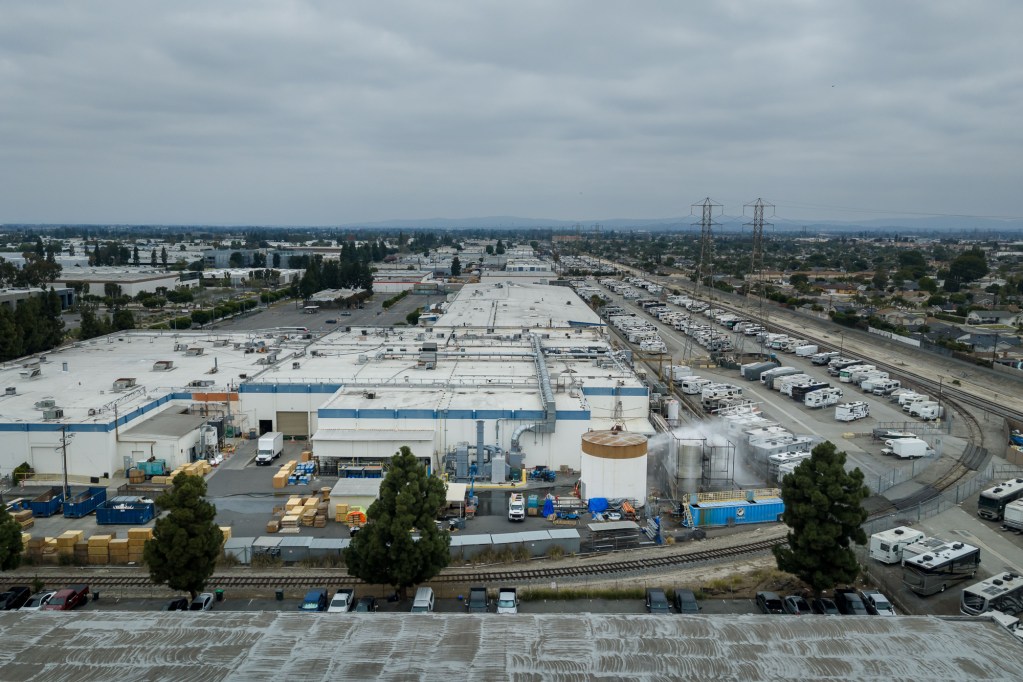
Gov. Gavin Newsom appointed Williams to the board in January, shortly after he stepped down as the governor’s deputy chief of staff. In a letter sent to Williams, and shared with the board and the department, a coalition of environmental groups raised alarms over his subsequent work for Axiom Advisors, a Sacramento lobbying firm whose client roster includes Clean Harbors, which operates a major hazardous waste facility, and GKN Aerospace, the company responsible for a chemical release that forced thousands of Orange County residents to evacuate in May.
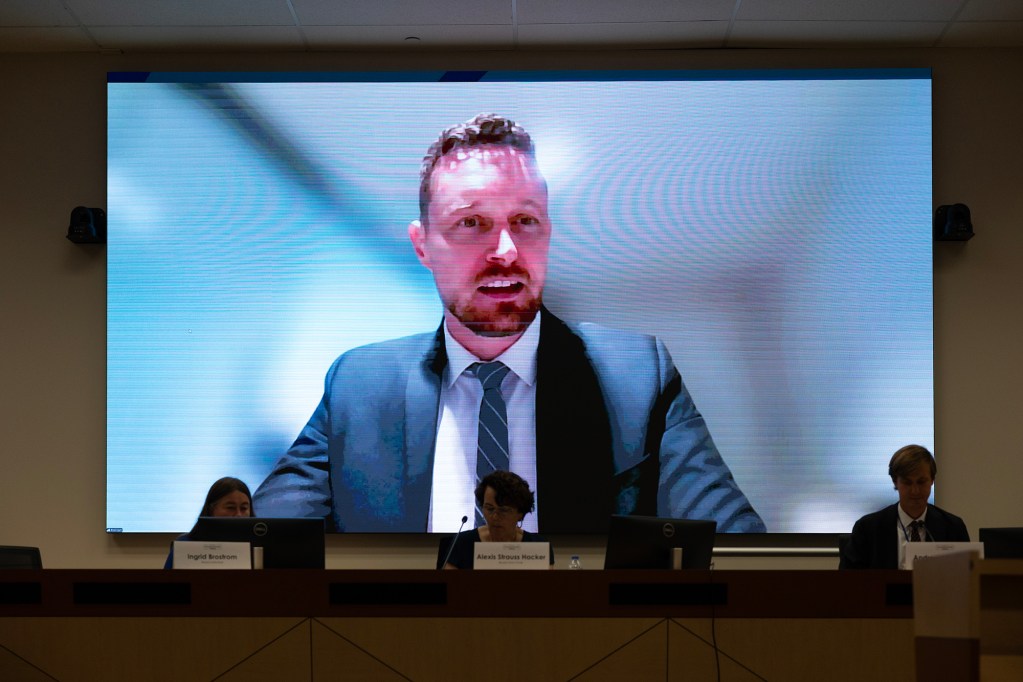
Williams did not respond to requests for comment from CalMatters, and he did not address the letter during the board’s meeting Thursday. He has not been accused of breaking any law, and legal experts note his appointment fell within the bounds of what’s permitted.
The governor’s office defended the appointment, saying Williams underwent a thorough vetting process and that his lobbying work does not present a conflict because he does not represent clients with active matters before the board. Williams has also committed to recusing himself from any votes involving Axiom’s clients.
“Rhys Williams is an exceptionally qualified public servant with years of experience helping California navigate some of its most complex infrastructure, emergency management, and environmental challenges,” said Newsom spokesperson Anthony Martinez. “His appointment reflects his deep subject matter expertise, professionalism, and longstanding commitment to public service.”
But advocates argue that the appearance of divided loyalties alone is enough to undermine confidence in the board’s independence.
“They were alarmed by just the audacity of appointing somebody who is or has been tied to the toxic waste industry,” said Bradley Angel, executive director of Greenaction for Health and Environmental Justice. “It does not bode well for impartiality or for upholding the stated mission of the Board of Environmental Safety, which is to protect the public from toxics and promote environmental safety, not promote polluter profits.”
Questions of impartiality
Records from Williams’ LinkedIn profile and lobbying disclosures filed with the California Secretary of State show that Axiom Advisors brought him on in May, roughly four months after he joined the state board. The firm publicly announced his hiring the following month, touting his government connections as a selling point for clients. “This appointment brings something very important to Axiom’s clients,” the announcement read. “Rhys’ extensive experience with the agencies that can move projects forward is invaluable to companies looking to do business here.”
Axiom’s client list includes GKN Aerospace, which uses the hazardous chemical methyl methacrylate to manufacture aircraft components such as cockpit canopies and passenger windows; Clean Harbors, which runs one of only two hazardous waste landfills in the state; and the California Building Industry Association, a trade group representing homebuilders and developers.
According to a source familiar with the discussions, Williams has attended meetings in his capacity as an Axiom lobbyist between GKN representatives and staff for state Sen. Tom Umberg, an Orange County Democrat pushing legislation to hold the company accountable and provide relief to affected residents. The toxic substances department does not directly regulate GKN as an aerospace manufacturer, though it could have jurisdiction if the company handles or transports hazardous waste.
Williams’ career in Sacramento dates back more than a decade. He joined Newsom’s staff in 2014 as chief of staff during Newsom’s time as lieutenant governor, later advising him on infrastructure and emergency preparedness issues throughout his governorship.
Before leaving for the board post, Williams earned close to $200,000 annually as deputy chief of staff. His new part-time position pays $93,135. Newsom has since also named him to the Board of Forestry and Fire Protection, a role that comes with a $100 daily stipend. Asked in January about Williams’ departure from the governor’s office, spokesperson Izzy Gardon said the longtime aide had “earned his freedom” after more than ten years of service.
A board under scrutiny
Williams stepped into a board still working to shed criticism over how it has handled oversight of polluting facilities in its first five years of existence. In the coming months, the board is expected to weigh in on several contested permits tied to some of California’s largest hazardous waste operations.
The board’s formation followed years of frustration from residents and advocacy groups who said the Department of Toxic Substances Control routinely dragged its feet on permitting decisions and failed to shield vulnerable communities from pollution.
Chief among the incidents that spurred reform was the decades-long Exide lead battery contamination case in Los Angeles. Regulators eventually determined the Vernon-based battery recycler had been releasing lead and arsenic into the soil near thousands of homes for years, all while operating under nothing more than a temporary permit for more than three decades. State inspectors documented over 100 violations at the site yet allowed the plant to keep running.
In 2015, following an earlier bankruptcy filing, Exide agreed to shutter the plant for good and contribute $50 million toward the cleanup. When the company filed for bankruptcy a second time in 2020, a federal judge signed off on a settlement letting Exide walk away from the property entirely, over state objections, leaving California to shoulder the ongoing cleanup costs.
Critics say the pattern of delayed permitting and lax enforcement hasn’t gone away. Clean Harbors operated for two decades on an expired permit before the department finally issued a renewal last month. Phibro-Tech, a hazardous waste treatment and recycling facility in Santa Fe Springs, ran on a permit that lapsed in 1996 for nearly 30 years before receiving a new one in 2025; the board is set to rule on appeals tied to that permit in October. And Ecobat Resources, the only lead battery recycler west of the Rockies, operated for a decade on an expired permit before getting a renewal last year, with related appeals scheduled for board review in January.
Neither Phibro-Tech nor Ecobat are Axiom clients.
“The BES was supposed to be our firewall to safeguard communities,” said Matt Holmes, co-coordinator with the California Environmental Justice Coalition. While he credited the board with improving communication with affected communities, he said it has fallen short of its core mission. “We’ve been disappointed that the (board) really hasn’t been the firewall for toxic communities to get equal treatment from the state,” Holmes said, adding that the letter demanding Williams’ resignation was meant to clarify expectations for the board going forward.
What the law allows
Legal experts say there’s nothing inherently illegal or unusual about state board members holding outside jobs as lobbyists — the issue arises only if they end up advocating for companies whose matters they’re later asked to rule on. There’s no indication Williams has crossed that line: GKN Aerospace does not hold any hazardous waste permits regulated by the department, and it’s unclear whether he has direct ties to Clean Harbors or any other Axiom client that has drawn scrutiny.
Even so, USC government ethics professor Frank Zerunyan said Williams’ situation could raise concerns under broader common-law conflict-of-interest principles. “The fact that this person lobbies for a particular interest, does that make the people of California, which relies presumably on this person to be an objective commissioner or a board member for the purpose for which he is appointed, less trusting of California, or less trusting of that organization?” Zerunyan said. “That is the question.”
Environmental groups say the answer doesn’t hinge on whether Williams ever actually casts a vote involving an Axiom client. In their letter, they wrote that his ongoing association with the firm alone invites doubt: “For the duration of your tenure with the Board, the public may question whether your statements and activities (or lack thereof) could be consciously or subconsciously influenced by the interest of current Axiom clients, as well as the interests of potential clients Axiom may hope to attract.”
A pattern of political appointments
Williams is among more than a dozen former Newsom staffers and political allies the governor has placed in paid or unpaid roles across California’s many boards and commissions. Such appointments are a long-standing tradition in Sacramento, particularly as governors near the end of their terms, offering soft landings for aides leaving full-time government service while allowing the governor to retain influence over policy decisions.
“It is a time-honored tradition for California governors to appoint high-ranking staff to plum positions as a ‘reward’ for working in high-pressure, 24-7 jobs in the administration,” said Sacramento political consultant Steve Maviglio, who received a similar appointment to the Unemployment Insurance Appeals Board in 2003 under then-Gov. Gray Davis. Maviglio, who served as Davis’ press secretary, said it’s reasonable for governors to reward staffers who are “loyal and battle-tested,” though he acknowledged that “sometimes appointments are made for the sake of qualifying for pension benefits.” Davis’ successor, Gov. Arnold Schwarzenegger, once pledged to shake up the state’s boards and commissions — only to later fill several of them with his own former staffers.
Original source: CalMatters