
The Soboba Band of Luiseño Indians celebrated the completion of the Soboba Fire Station Microgrid Project with project partners at a ribbon cutting, Nov. 5. The project combined solar energy and long-duration battery storage to strengthen energy resilience, support critical emergency services during power outages, and provided hands-on clean energy training opportunities for Soboba Tribal members.
Working for the past several years with the California Energy Commission, University of California Riverside, Ageto, Invinity Energy Systems, and GRID Alternatives, the Tribe has been involved with every step that made the project come to a successful culmination.
Tribal Executive Officer Steven Estrada welcomed everyone to the official ribbon cutting ceremony on behalf of Soboba’s Tribal Council. He said the Tribe has gone through various difficulties when it comes to power, citing times when residents have gone without power for more than two days which creates hardship, especially for elders.
“It’s critical to have reliable power in order to support not just this community, but the surrounding communities as well,” Estrada said. “When the fire station was constructed, the Tribe entered into a mutual aid agreement with the state. The fire department here doesn’t just dispatch to the reservation, but also the outside community to provide those supportive services, so being able to get that emergency information in order to be dispatched out, is a critical need.”
Estrada explained that in 2016, the Tribe opened its first one-megawatt solar facility. That project provided power back to the grid, offsetting some of the costs for the Tribe. In 2019, a second one was set up and most recently, a one-megawatt was installed at the Soboba Casino, providing power there as well.
“Safety and resilience have been the top priorities for these projects and this small microgrid is part of the greater extent of the Tribe’s overall energy strategy,” Estrada said. He added that this project would not be possible without the partners the Tribe collaborated with over the years.
“GRID Alternatives’ Lisa Castilone, thank you so much for always being such an advocate, not just for this Tribe, but all Tribal communities throughout the state. We truly appreciate that,” Estrada said. He also thanked present representatives from University of California, Invinity Energy Systems and the California Energy Commission for all their support.
Jaime Alonso, Executive Director for GRID Alternatives Southern California, said he was pleased to see the project that began in 2020 finally be completed.
“When you stack all the different components together and have them talk to each other and work together and do it in a way that’s both safe and in compliance with utility rules, it adds a layer of complication and complexity,” he said. “So, it’s really an honor to be here to celebrate all the collective effort that it took to make this project a reality.”
GRID Alternatives is a nonprofit renewable energy installer. “We don’t just install systems though; we work with communities to build the types of systems that are responsive to real needs,” Alonso said. “The real need associated with this project was to address the predictable, sometimes planned and unplanned shutoff events that would happen and face this community. And so, we came together and basically asked and tried to tackle the question of how do we ensure shut off situations? How do we ensure that those who most need reliable access to energy have it readily available to them? We know that when power shutoffs happen, emergencies don’t stop. They continue, and oftentimes they increase.”
He said having a critical facility like this to be able to maintain its power to continue operations is critical. “You’ve heard a lot about how innovative this project is. Another element of innovation is just the collective effort that it took to get this project done, navigate all of the challenges, whether it was supply chain issues that we had, interconnection, or permitting challenges that we had. I want to express my deep appreciation for the leadership of the Soboba Tribe.”
Colin Boone is the Commercial Vice President for Invinity Energy Systems, which manufactures the battery that is a main component of the system located outside the fire station. “These projects have objectives,” he said. “Our company actually is founded on the goals of sustainable energy, energy independence, being able to be responsible for yourselves, lower contribution to greenhouse gas, and ultimately kind of bringing a world together where every community has the ability to have electricity, to have power. I wanted to take a moment and say how grateful we are to be involved with your community, to actually do a project that is proving out energy resilience, hopefully more and more towards energy independence. You are also helping our organizations by participating in our learning and our product development.”
Noemi Gallardo is one of five commissioners at the California Energy Commission. “On behalf of the team that’s representing the Energy Commission here and the entire Energy Commission, big congratulations to Soboba, for reaching this milestone, and what I would call your clean energy journey. And hopefully, that journey will continue with many more positive, big milestones like this,” she said. “I talk to other Tribes about what difference clean energy can make and I use Soboba as an example of what you all are doing with this fire station. So, I want to applaud you for doing that work and giving us a model of what other Tribes and other communities can do with clean energy.”
“At the Energy Commission, we are committed to energy resilience, reliability, and the importance of achieving 100% clean energy future for all Californians,” Gallardo said. “That’s our mission. When we work with Tribal governments, though, those conversations must include energy sovereignty. And energy sovereignty isn’t simply about generating electricity or installing new technology. It is about self-determination. It’s about Tribal governments having the resources, the partnerships, and the opportunities to make decisions that reflect their own priorities, that protect their people and support their communities for generations to come.”
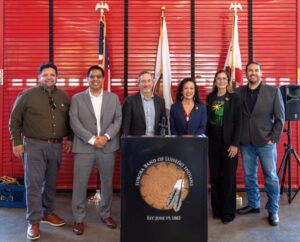
Gallardo said, “Soboba’s leadership on this project demonstrates exactly why that approach matters because no one understands the needs of a place better than the people who call it home. Reliable energy is more than keeping the lights on. It’s about life. So, as we prepare for Soboba to cut the ribbon today, I want to leave you with one final thought. We often measure the success of energy projects in megawatts, kilowatt hours, and dollars invested, and those measurements are very important. But I think the real success of this project will be measured in moments of lives saved, special places protected, and also local pride. Soboba Fire will be ready because of the work that everyone here has done in collaboration. I want to thank you for making California not just a brighter place to be but also a safer place.”
UCR Associate Project Scientist Alfredo A. Martinez-Morales, Managing Director of the Southern California-Research Initiative Solar Energy (SC-RISE), reflected on what the project has meant to him and his research students. “When we first developed a concept for this project, there was a need, and there was a team of people and organizations willing to respond. It has been a very interesting journey. Lots of lessons learned, that hopefully we’re going to share with others so that they don’t have to repeat some of those challenges that we encountered. But when I think about this project, you can see the system. You can understand how the system works, but in reality, it goes beyond the system itself. It is not only technology—it’s people, it’s community, it’s working together, it’s looking at the benefits beyond economics, emissions, and reductions and coming together like today. A group of people coming together to celebrate what is a really happy moment. When we look at the system out there, we took care of the seeds, we nurtured the plant, and now we’re seeing the fruit. And so this fruit will bear for many years to come, and I’m really optimistic about what will happen in the next few years.”
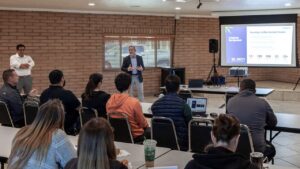
Prior to the official ribbon cutting, a one-hour workshop was held at the Tribal Hall where partners gave an overview of the project and what could be expected. Attendees then transitioned to the fire station where the units are located to experience an in-person site overview.
Soboba Tribal Environmental Department Director Christian Aceves said the workshop helped him develop a better understanding of the solar system’s components and how they work together to generate, store, and distribute energy.
“I also learned how to analyze generation and battery storage data to identify peak usage periods and verify that the system is operating effectively during times of highest demand. This knowledge will help maximize Soboba’s energy cost savings by strategically utilizing stored battery energy during peak demand periods,” he said. “Moving forward, I am interested in exploring opportunities to further optimize the system, including evaluating the feasibility of exporting excess energy back to the grid. Doing so could enhance Soboba’s sustainability efforts, increase energy independence, and potentially provide additional financial benefits.”
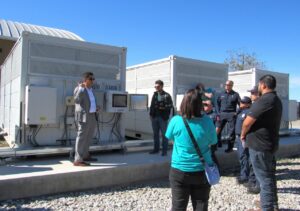
This solar-charged, long-duration energy storage and resilience program serving the Soboba Fire Station is designed to mitigate the impacts of grid outages. With the Soboba Reservation located in a “Tier 3 Extreme High Fire Threat Zone,” the community experiences frequent grid outages. The outages affect both the safety and the quality of life of Tribal members, conditions that are exacerbated during natural disasters and other such emergencies.
“Overall, this solar and battery storage project represents a significant investment in Soboba’s long-term sustainability, energy resilience, and financial stewardship. Beyond the immediate benefits of reducing energy costs and increasing energy independence, the project demonstrates Soboba’s commitment to responsible environmental management and serving future generations,” Aceves said. “The successful implementation of this system provides a strong foundation for continued innovation in renewable energy within the community. As we gain more operational experience and analyze system performance, STED looks forward to identifying additional opportunities to expand and optimize renewable energy initiatives. By building upon the success of this project, STED hopes to further enhance energy efficiency, strengthen sustainability efforts, and create lasting economic and environmental benefits for the Soboba community.”