
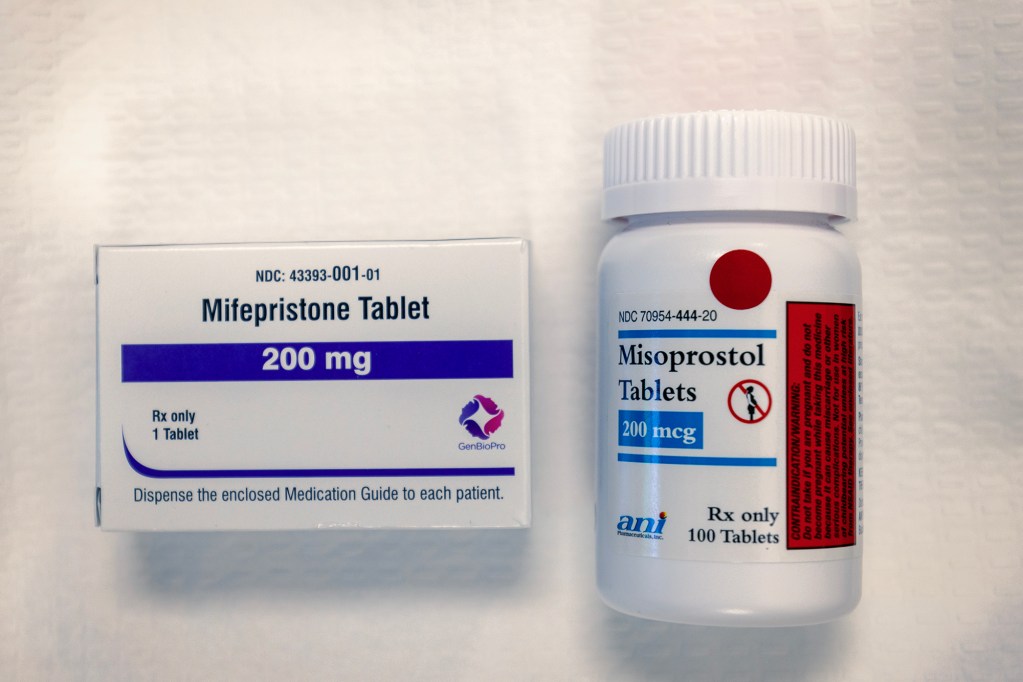
A California courtroom is now the latest battleground in the national fight over abortion access, as the state pursues legal action against two Christian anti-abortion organizations over a controversial treatment marketed as “abortion pill reversal.”
Following six weeks of testimony, an Alameda County judge must now decide whether the groups’ promotion of the treatment is protected under the First Amendment, or whether it amounts to false advertising under state consumer protection laws.
The lawsuit, filed by Attorney General Rob Bonta in 2023, targets Heartbeat International, a national anti-abortion organization, and RealOptions Obria, a network of Northern California anti-abortion clinics. Both groups promote a hormone-based regimen they claim can stop a medication abortion already in progress.
State attorneys argue the treatment lacks scientific support and could put patients at risk. They are asking for $20 million in penalties under California’s unfair competition and false advertising statutes.
The defendants maintain that thousands of women have gone on to deliver healthy babies after using their services, and that discussing the treatment is a form of protected expression tied to their religious beliefs. Heartbeat International operates the Abortion Pill Rescue Network, a hotline that connects patients with providers willing to administer high doses of progesterone in an effort to counter the effects of mifepristone, the first drug used in a medication abortion. The organization has more than 90 affiliated sites across California, including RealOptions locations.
Deputy Attorney General Erica Connolly told the court the groups exploit women during a vulnerable moment.
“Those individuals need accurate information, but accurate information is not what the defendants provide,” Connolly said. “Instead, they tout false hope.”
Attorneys for the anti-abortion groups counter that because the reversal services are offered free of charge, false advertising claims don’t apply. Defense attorney Paul Jonna argued the state has failed to show that anyone was actually harmed, describing the lawsuit as “an ideological campaign disguised as consumer fraud prosecution.”
A federal appeals court reached a similar conclusion in a comparable case out of New York, ruling that the reversal claims did not qualify as commercial speech and therefore fell outside the reach of that state’s advertising laws.
Understanding the treatment in dispute
A typical medication abortion involves two drugs — mifepristone, which blocks the hormone progesterone that sustains pregnancy, followed 24 to 48 hours later by misoprostol, which triggers contractions that empty the uterus, similar to a miscarriage. According to the American College of Obstetricians and Gynecologists, medication abortions now account for roughly two-thirds of all abortions performed nationally.
Heartbeat International claims that administering large doses of progesterone after mifepristone but before misoprostol can reverse the abortion process. The organization reports more than 8,000 continued pregnancies nationwide through this method, citing a success rate between 64% and 68%.
Jonna said several women who testified for the defense described feeling grateful for the intervention, not deceived, and noted that no formal consumer complaints have ever been filed against either organization.
But the state contends the treatment’s promoters are making definitive medical claims without solid scientific backing. The handful of studies commonly cited to support “abortion pill reversal” have been widely discredited by major medical organizations, including the American College of Obstetricians and Gynecologists and the New England Journal of Medicine, both of which say the research is deeply flawed.
“They are welcome to talk about it,” Connolly said. “They’re just not allowed to lie about it.”
Research shows that completing both steps of a medication abortion is effective 95% to 98% of the time. Women who take only the first pill and stop there will still carry the pregnancy to term about half the time — without any additional intervention.
A pattern of legal battles over crisis pregnancy centers
RealOptions is what’s known as a crisis pregnancy center — typically a faith-based organization that opposes abortion and may offer services such as ultrasounds or pregnancy testing. These centers vastly outnumber abortion providers in California, by a ratio of more than five to one.
Critics argue the centers often mislead women seeking abortion care, while supporters say they provide a needed option for those facing unplanned pregnancies.
California has long struggled to rein in these centers through legislation. In 2018, the U.S. Supreme Court struck down a state law that would have required such centers to inform clients about abortion and contraception options, and to disclose when a facility was not licensed to provide medical care. The justices ruled the law violated free speech protections under the First Amendment.
Legal scholar Mary Ziegler, who has no connection to the current case, says the outcome will largely depend on how the court classifies the speech in question.
“Is it political and religious speech? Is it commercial speech, which enjoys less protection? Is it just conduct?” Ziegler said, noting that crisis pregnancy centers occupy a murky legal space — presenting themselves as advocacy groups while sometimes functioning like medical clinics.
In the New York case, the 2nd U.S. Circuit Court of Appeals sided with the anti-abortion defendants, ruling that statements about “abortion pill reversal” were constitutionally protected because they stemmed from religious and moral conviction.
Meanwhile, a Kansas state court judge recently struck down several abortion restrictions, including a requirement that providers inform patients about the reversal treatment, ruling that the mandate infringed on patients’ bodily autonomy by forcing them to hear “unproven” medical claims.
Ziegler said that even if California ultimately loses this case, reproductive rights advocates may still view it as a meaningful step forward.
“If the world we live in says, you know, you have a protected right to tell patients things that are potentially dangerous to them, then that’s going to raise public concerns anyway,” she said.
Judge Patrick McKinney is expected to issue a ruling within the next three months.
Original source: CalMatters