

In most driving under the influence (DUI) cases, police will pull motorists over because of a traffic violation or signs of impairment. Often, a stop is legal as long as police have reasonable suspicion or reasonable cause to believe you have violated the law.
If authorities had no reasonable justification for pulling you over, you could bring a motion to suppress. This can result in the case being thrown out. You will also need the help and guidance of an experienced DUI lawyer to help you achieve a favorable outcome.
During a DUI stop, you will be asked if you have been drinking. Typically, most would give an underestimation of what they have drank. Once police get confirmation that you have been drinking, they will often investigate further.
Also, if authorities have reason to believe there is incriminating evidence inside your vehicle, they can search it even if they don’t have a warrant. Generally, they can also look inside your vehicle if you permit them to do so.
Officers who suspect you are driving under the influence will often confirm their suspicions through roadside tests. Some tests include preliminary alcohol screening (PAS) tests and field sobriety tests (FSTs).
All 50 states have “implied consent” laws. This requires that you submit to chemical testing if you have been lawfully arrested for DUI. The test is done to measure the amount of alcohol or drugs that are in your system.
If you refuse the testing, you will likely face consequences that include fines, license suspension, and installation of an ignition interlock device (IID). In other states, refusing the testing can result in a separate criminal conviction.
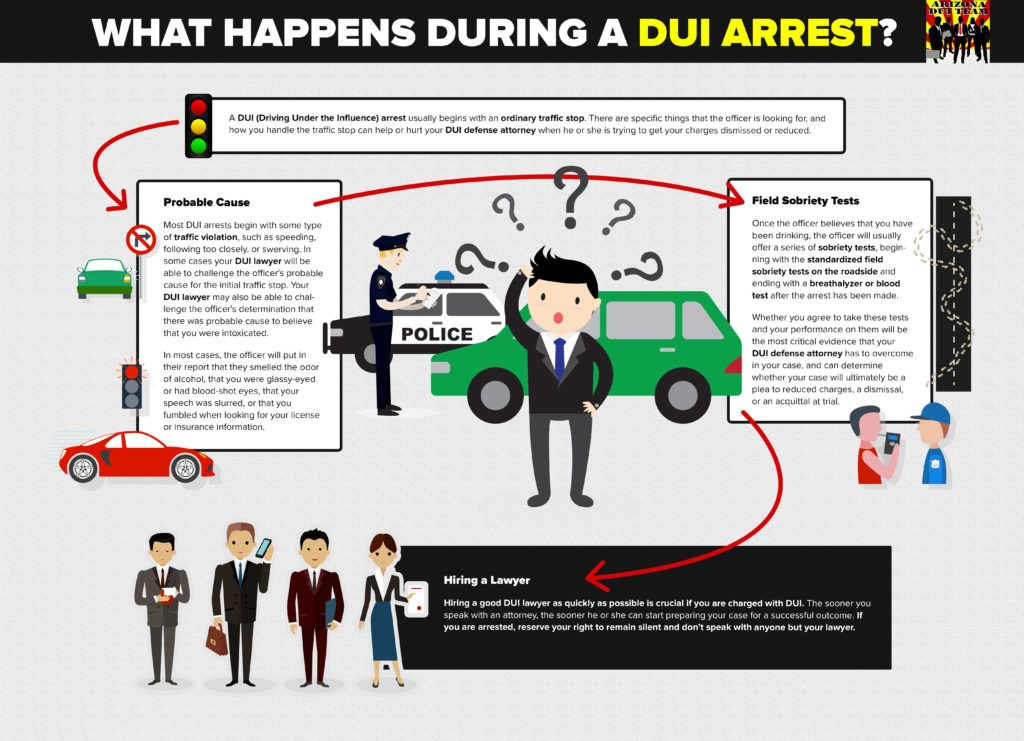
If authorities determine probable cause to arrest you, you will be cuffed and taken to the police station or local jail. Typically, your driver’s license will also be taken. Check the infographic below to know what else to expect during a DUI arrest.
About the Author
Michelle White is currently the Content Marketing Strategist for Arizona DUI Team. Aside from spreading awareness on DUI and vehicular-related offenses, she enjoys reading and hiking with her family and friends.





