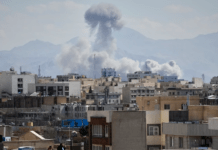
Israel’s attacks on Tehran have not only targeted military bases and nuclear sites, but they also have penetrated the bedrooms, kitchens and living rooms of ordinary citizens. Children have been killed. Teachers have fallen silent. Athletes have been buried in the rubble. All of them were as far removed from politics as possible.
The attacks between Israel and Iran started on Friday, when Israel launched what it called preemptive air strikes targeting more than a dozen Iranian sites — including key nuclear facilities, nuclear scientists and military leaders — in an operation it said was aimed at preventing Iran from developing nuclear weapons.
According to the Iranian Ministry of Health and Medical Education, at least 224 people have been killed and 1,481 wounded.
Iran has retaliated with a wave of ballistic missile strikes against Israel, claiming the lives of at least 24 people and wounding 380, in an escalation that has raised fears of a broader regional conflict.
In Tehran, the full scale of the destruction remains to be seen. But in the streets, evidence of the lives lost emerges from the wreckage of bombed-out buildings. A child’s lifeless body in the rubble. A dirt-covered doll abandoned in the street. A sketchbook lost among the concrete and dust.
For many Iranians, these scenes evoke memories of the Iran-Iraq War. But this time, the war is not at the borders; it’s in the heart of the capital. Residents say the night sky in Tehran — now dotted with missiles and fires — is not the one they know.
In a mass panic, people are fleeing the city in droves. Petrol stations are overrun. Highways are jammed. Homes that once promised safety stand vulnerable with no emergency shelters or warning sirens.
Here are some of the victims who died in the recent attacks on Tehran.

The Pilates instructor
On Saturday morning, Tehran reeked of dust and smoke. Israeli missiles had landed on homes that were filled with laughter just hours before. One of the silenced voices belonged to Niloufar Ghalehvand, whose friend Ghazal* recalled the last time she saw her at a cafe sipping coffee, just one night before the bombs fell.
Ghalehvand, a 32-year-old Pilates instructor, was killed along with her father, Kamran Ghalehvand, and her mother, Fatemeh Sedighi, in their home on Ozgol Street in northern Tehran.