

The evening that cemented my relationship with my collaborator, Jenny Johnson, involved a Manhattan in a waterfront bar, a deafening tuba solo, and my attempt to take a call from a now-disgraced former sheriff while Jenny tried to stop herself from laughing.
I was a reporter for the Los Angeles Times working in the San Francisco bureau, and I had a deep interest in the collision of our mental health and criminal justice systems. Jenny was a source, a deputy public defender who had co-founded San Francisco’s acclaimed Behavioral Health Court and would help run it for 15 years. She’d seen countless clients revolving through the criminal courts because they were falling through the cracks of a decimated and fragmented mental health system. We knew right away that one day we’d work together on a creation of our own making, while forever remembering that deafening tuba solo.
In 2015, I left the LA Times to pursue the craft of longform audio. A few years later, Jenny left the public defender’s office to consult across the country and co-teach mental health and the law at UC Berkeley. With our window of opportunity open, we dreamed up a deeply reported narrative podcast that explores mental illness, confinement and liberty through California stories.
We knew there was excellent coverage out there already of modern-day tragedies and innovations. We wanted to make something different, to take a bigger-picture view of who is labeled as mentally ill, who is most likely to lose their liberty, and who is least likely to be treated with dignity.
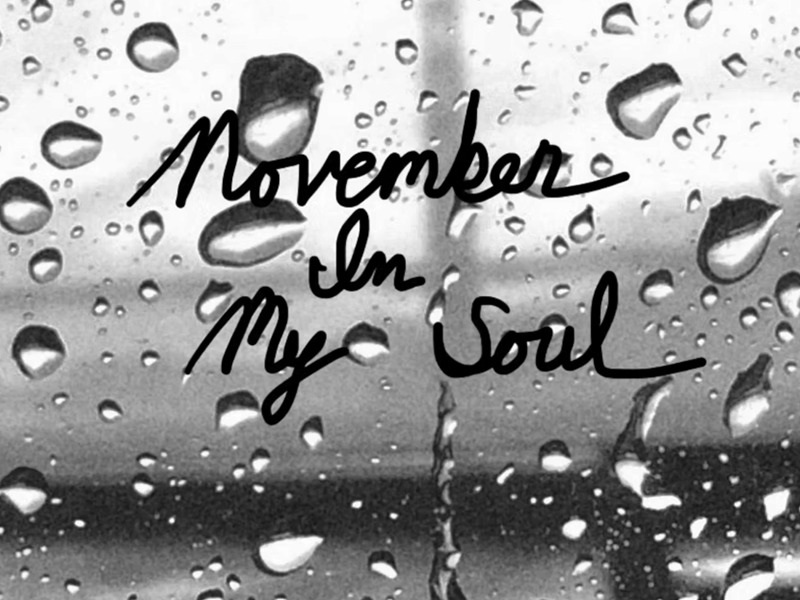
The result is “November In My Soul.” The limited 10-episode podcast will examine California’s relationship to mental illness and confinement through a historical and intersectional lens. In paired episodes, we’ll take listeners on a journey to explore how some of our darkest history still influences our current crisis — and how dignity-based reforms can make healing possible.
Our podcast will reflect on the institutionalization, deinstitutionalization, and criminalization of people with mental illness through the overlooked voices of Black, Latinx, and LGBTQ people, as well as rural Californians and the elderly. Their collective experiences have ranged from benevolent warehousing to neglect to torture at the hands of the state. The most powerless among us are labeled deviant, vagrant, demented, psychopathic, schizophrenic — and criminal. Each episode will center the voices of those directly impacted and rely on their input and guidance while in progress. We also plan to offer up finished episodes to the community through live and virtual events to spark dialogue, healing, protest, and artistic interpretation.
We had the privilege of securing some production funding from California Humanities in March 2020, just as COVID sidelined us, but it must be matched and is not intended to be enough to get us to the finish line. Thanks to the 2022 California Impact Fund, we’ll be researching, scripting and producing shortened versions of two episodes exploring the pathologizing of LGBTQ people. The two half-hour shows will air on KQED’s The California Report Magazine, along with paired print pieces published through MindSiteNews, which shares its content freely to push in-depth reporting on mental health into the world. We hope to encourage community newspapers and websites to run the print pieces.
One episode explores a dark chapter of California history, when gay men were labeled mentally ill and committed to state institutions, where they were then subjected to experimentation without consent. The second examines the intersection of bias, pathology and confinement in our more contemporary transgender population. I am the sole grantee, and I will be doing the bulk of the reporting. But Jenny and I are co-directors, co-researchers and co-hosts. Her analysis, compassion and expertise are invaluable.
Lee Romney | Contributed
Find your latest news here at the Hemet & San Jacinto Chronicle




