
High above the forest floor in the San Bernardino National Forest, a pair of bald eagles has once again captured the attention of thousands over Easter weekend — this time with the arrival of two long-awaited chicks.
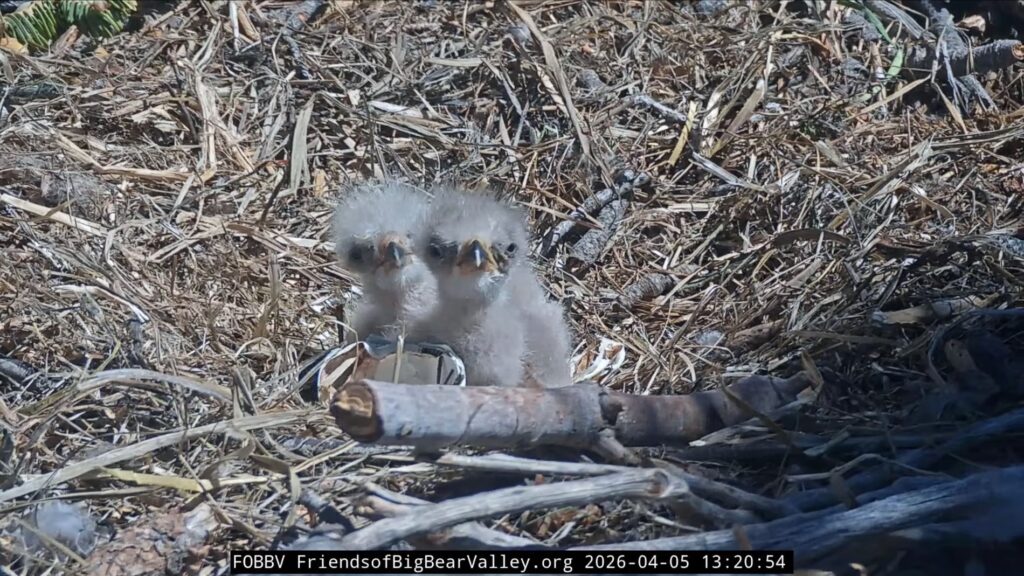
The eaglets, born to the well-known eagle pair Jackie and Shadow, hatched roughly 145 feet up in their nest near Big Bear. The birds have developed a loyal following over the years, thanks to a live webcam operated by the nonprofit Friends of Big Bear Valley, which has been streaming their daily lives since 2018.
For many viewers, the moment felt especially meaningful.
“There’s a lot of relief and joy,” said media manager Jenny Voisard. “It’s been an emotional season — ups and downs for both the eagles and the people watching them.”
Earlier this year, Jackie lost two eggs after ravens invaded the nest, a setback that disappointed the large online community following the pair. But the eagles rebounded, with Jackie laying a new set of eggs later in the season.
That persistence paid off over the holiday weekend. The first chick emerged Saturday night around 9:30 p.m., followed by a second early Easter morning.
The hatchings quickly turned into a shared moment online, with viewers tuning in from across the country. According to reports, the Big Bear eagle cam is among the most-watched wildlife livestreams on YouTube.
Voisard said part of the appeal is the chance to witness something real and unscripted — from the bond between Jackie and Shadow to the unpredictable nature of raising young in the wild.
“People get to see everything — the challenges, the setbacks, and how they keep going,” she said. “There’s something really powerful about that.”
The scenic backdrop doesn’t hurt either. Big Bear Valley, known for its rich biodiversity, offers a window into nature that many viewers might not otherwise experience.
The growing fan base has also turned into a source of support. The nonprofit behind the livestream is currently working to protect land near the nest from development. In just a few weeks, supporters have raised more than $1.6 million toward a $10 million goal aimed at preserving the area.
Back in the nest, life is already moving quickly. Footage from the livestream shows the parents feeding the fuzzy gray chicks, who are growing rapidly in their first days.
“These early weeks are all about food and protection,” Voisard said. “They grow so fast — you can literally see changes from one day to the next.”
If all goes well, the young eagles are expected to leave the nest — or fledge — within the next 10 to 14 weeks, marking the next chapter in a story that has already brought a sense of connection and hope to thousands watching from afar.