

There was a celebratory atmosphere at the Soboba Tribal Preschool multipurpose room as parents and their young children attended a potty-training luncheon event, July 9. Facilitators Amanda Nogales, Parent Partner I, and Ashley Sayers, Parent Partner II, from RSBCIHI’s Tribal Family Partners offered tips and answered questions, keeping the subject light and not like a lectured lesson.
Preschool Director Lenora “Ponie” Mojado said the past two summers this event has been held led to successful student enrollment and she expects the same this year. To be eligible to attend the preschool, children must be potty-trained and at least 3 years old by September 1.
She welcomed all the little learners and their families to the event where all the teachers and staff introduced themselves. Mojado also made sure each attendee received a raffle ticket for their choice of some great prizes, from toys donated by Santa Claus Inc., a children’s potty chair donated by teacher Julissa Garcia and other great items donated by Soboba TANF.
Kids at the event were all at different stages of potty training and as the Parent Partners pointed out, each had their own cues and development timeline. There is no “right” age as to when a child should be or could be ready. Nogales said the range is typically from 18 months to 4 years with age two being the most common age that children show an interest and understanding of the subject. The Parent Partners like to refer to the process as toilet learning.
There were fun games set up around the multipurpose room that revolved around the theme. The preschool teachers and staff helped young ones “Pin the Poo” in the toilet, fish for underpants and diapers and toss diaper “balls” into a make-believe toilet. They then treated the participants with fun trinkets from treasure boxes filled with stickers, whistles, hand-held games and more.
One of the most interactive games gave kids a chance to show off their wiping abilities. Two balloons attached to a chair’s rear were filled with shaving cream in the crack between them. Children were given toilet paper to practice reaching behind them to wipe the balloons clean. They each received a reward for their efforts.
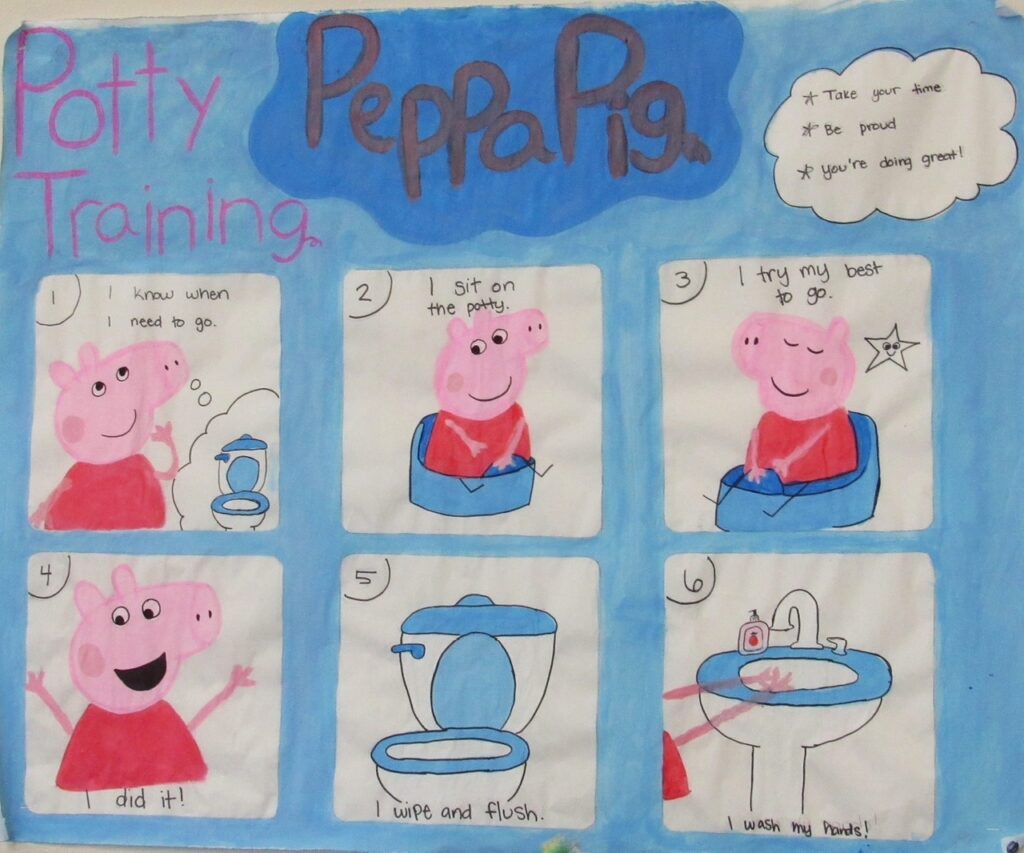
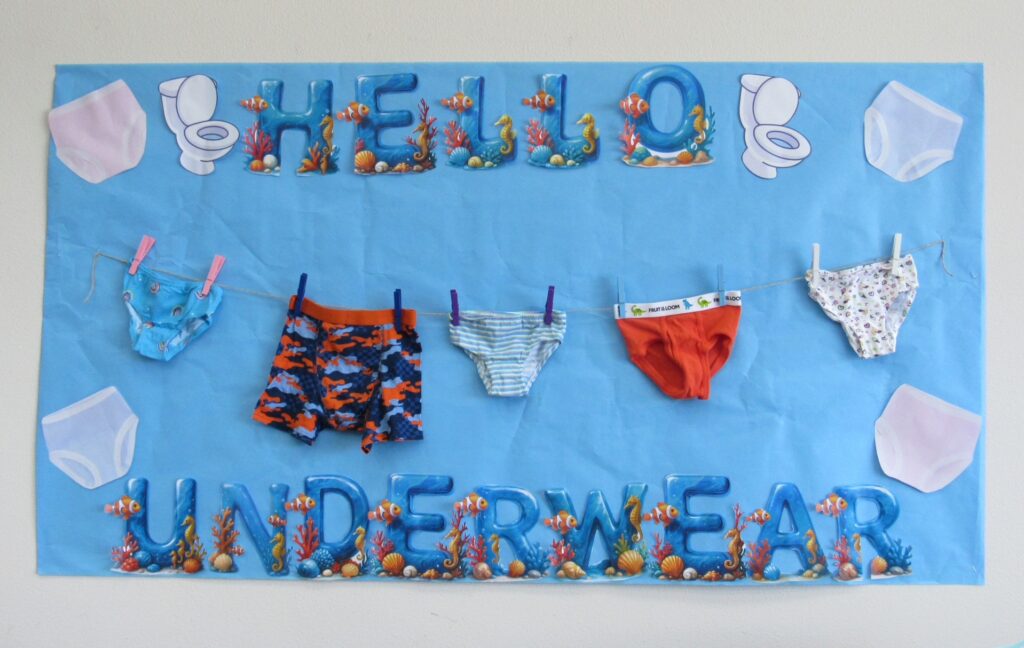
Posters decorated the walls of the room with encouraging messages, such as “Potty like a Rockstar” featuring Hello Kitty and Spiderman figures. Most were created by the student workers that are assisting at the preschool this summer as part of the TANF WE LEAD internship program. Kimani Resvaloso-Sanchez and Carolyn Hurtado will be assisting through the end of July, helping staff prepare classrooms for the upcoming school year.
The summery beach theme was evident throughout the room. A long table was set up with coloring pages and Tribal Family Partners offered a table full of helpful handouts. The whole event was geared toward engagement and teamwork.
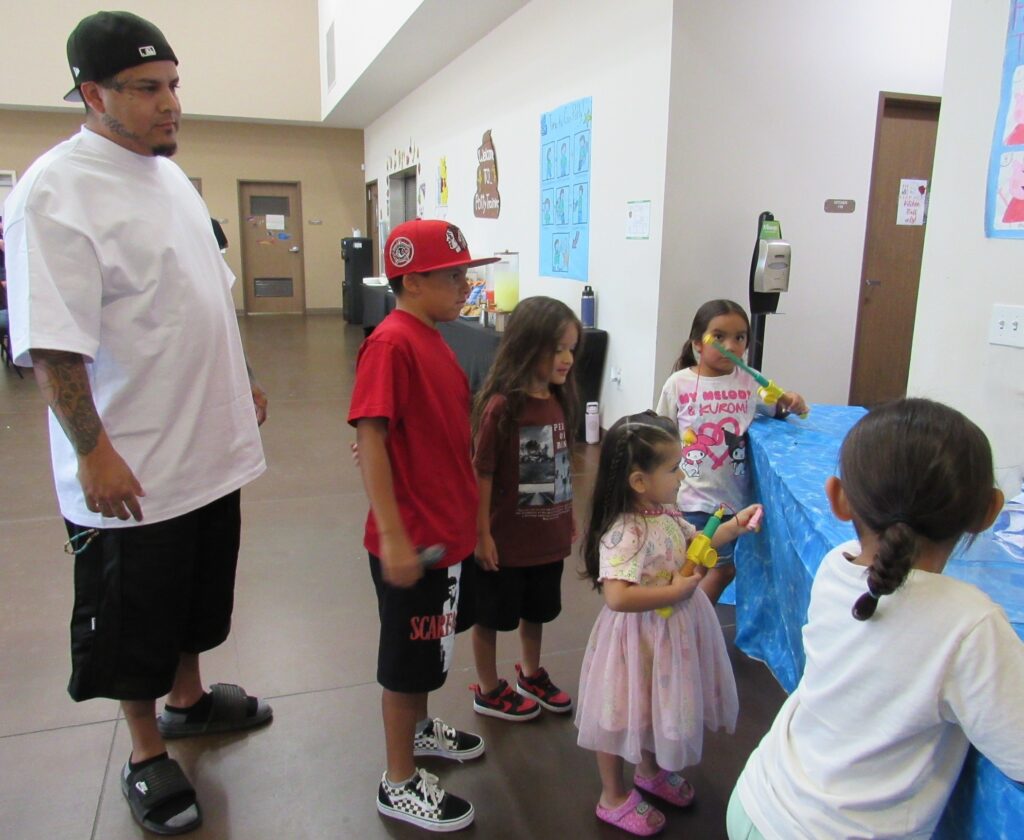
Nogales and Sayers applauded Mojado for hosting this event that brings in the parents to demonstrate the teamwork and partnership that exists. “It’s a big help when the parents are involved,” said Nogales, who was a preschool teacher for seven years and did not see these types of events held. Sayers said this program is just one of many offered by Tribal Family Partners that is strengths based. “We are all about listening to parents and meeting them where they’re at rather than dictating where they should be,” she said.
Assessing when the child is ready to begin potty training depends on several factors. A child should have sufficient muscle control and the ability to pull their pants up and down. The maturity of the bladder is also important. A good way to gauge this is if they have a dry diaper after napping and a steady flow rather than many episodes of a few dribbles. A child needs to be able to communicate when they need to use the toilet, whether through words, sounds, facial expressions or some other cue. A child will need to be able to follow instructions before successful toilet training should be attempted. Desire to learn how to use the toilet will speed up the learning process greatly.
Before beginning to teach the child how to use the toilet, it is suggested to help them pick words to indicate they need to go and whether it’s pee or poo. Role modeling by letting the child see an older sibling or parent using the toilet and explaining what they are doing can also be helpful.
Nogales and Sayers emphasized the importance of discussing with their child’s teacher what the classroom routine is so they can better prepare them for using the toilet when they are at school and not in the familiar environment of their own home.
“Teach them proper hygiene habits and praise them for all they do,” Nogales said. “Encourage them to keep trying and praise any attempts for washing their hands and other little things they do.”
Daniel Briones’ daughter Qaasimal, 5, is starting kindergarten next month and his son Too, also 4, will be headed to the Pre-K classroom. Both attended summer school there and enjoyed it. “I like how they include culture in things they do here,” Briones said. “This event was a good learning experience.”
Felix Ortiz brought three of his children to the event but was interested in finding some helpful tips as his three-year-old daughter Moyla is transitioning into being 100% toilet trained. He is looking forward to having her and his son Iswut, 4, both attending the preschool. His 10-year-old son Hunwut came along to support his siblings.
Stephanie Falcon said she was learning a lot at the event where her daughters Azaria, 3, and Aria, 2, were enjoying the games. “I’ve learned some tips that will be helpful,” she said.
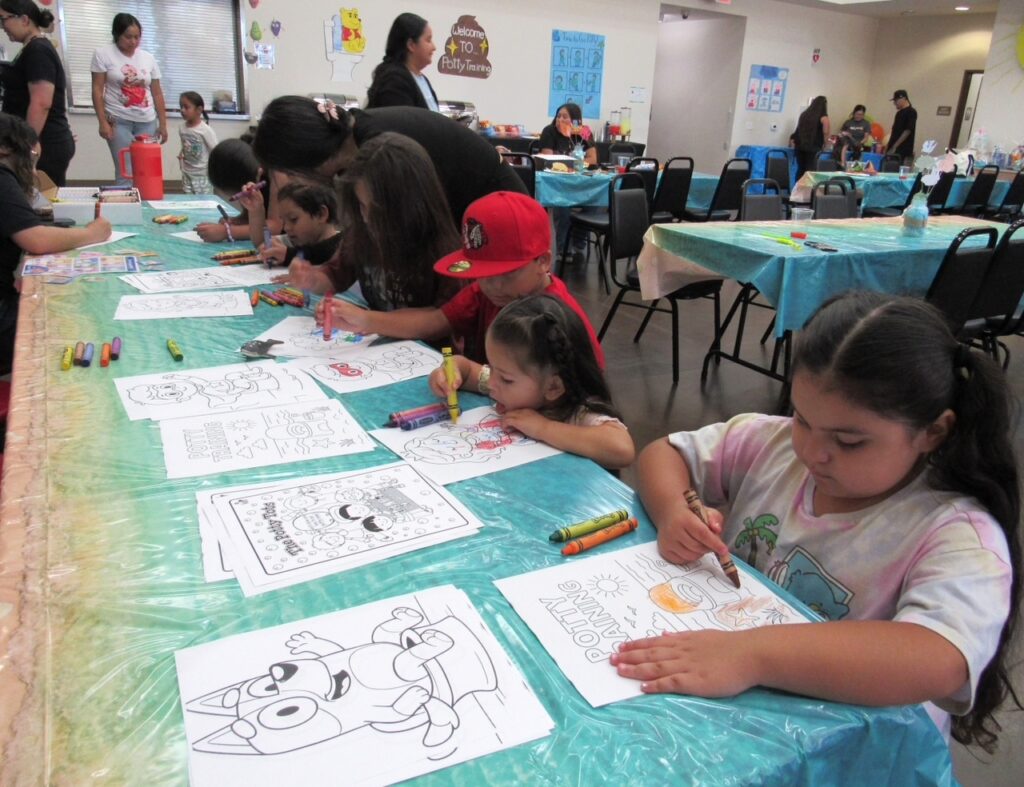
Preschool classroom teacher Julissa Garcia was also there as the parent of a three-year-old that she hopes will be attending the school next year. Tuukumit Herrera made his way around the room playing the different games and earning some great prizes while Garcia found the event to be very helpful.
As a teacher of the youngest students, she realizes that many are just getting potty trained. “I like that we get to team up with parents and families to work together to learn cues and patterns,” she said. “It always benefits the children.”
Sunnie Razon’s three-year-old daughter Millie is doing really well with her toilet training and has successfully completed the preschool’s summer session. Mom said doing the training with her older sister Khloe made things a lot easier for Milie. Razon said the event offered some interesting tips and tricks and good insight into the issue.
After finishing lunch, playing games and taking photos in front of the “Potty Time” backdrop filled with colorful balloons, families were invited to tour the classrooms and take home an enrollment packet if they didn’t already have one.
Tribal Family Partners is a grant-funded program that is free for all Native families with children prenatal to kindergarten entry. They offer one-on-one home visits, parent/child activities, cultural events, development screenings, social emotional assessments, stress management and more to keep Native families motivated, healthy and strong. Their goal is to help parents help kids get school ready. For more information, 951-849-4761, ext. 1136.
The 2026-2027 school year begins Aug. 4. If you are interested in learning more about the Soboba Tribal Preschool, please visit https://preschool.soboba-nsn.gov/ or call 951-487-8732.




