

For seniors at Noli Indian School on the Soboba Reservation, graduation isn’t just dependent on final exam scores. Every student is required to complete a senior project with multiple steps that began in August and culminated with an in-person presentation to a judging panel in April.
English teacher Jacquelin Phillips oversees the process with a strict timeline that starts with them submitting their topic, outline and five research sources when the school year kicks off in August. They must write an essay of at least eight pages that includes a minimum of five reputable sources, two from tangible sources and three from the Internet.
Throughout September and October, they needed to provide an introduction and detailed information about the sources they were citing. November was a light month with only their title page and references in MLA format required. By December, students had to submit their first rough draft with the second draft due at the end of January and a final draft in February.
Based on their topic, students created a 10-20 slide PowerPoint slideshow that had to include pictures and animations, at least three different transitions, and one video or audio component. March 12 was the due date for their completed slideshow.
They had two days and 2.5 hours to practice their presentations. They were given as many opportunities as they wanted to present in front of other classes and teachers, or even after school.
Presentations had to be a minimum of 30 minutes and include at least three physical objects to enhance the effectiveness of their slideshow’s topic. Students were rated on their ability to answer questions from the audience and dress professionally and/or appropriately to their topic.
“Each component is worth 100 points, graded individually,” Phillips said. “Students must pass each component. Students are docked points for components not turned in by the due date or turned in late.”
Along with teachers and staff members attending the two days of public presentations on April 21 and 22, there were 4-5 panel members using a rubric to score each one. From knowledge of their subject to engagement with the audience, they were rated from 1-4 on various criteria.
Panelists included Brian Eddy of Elsinore Valley Municipal Water District; Michelle Steffani, who works in the field of renewable energy; Angel Bill with the Brown Descents Car Club Association nonprofit; and Camilo DeLaCueva of Bostik Inc.
“This is something I put on my calendar every year because I like to support the students and their teacher,” Eddy said. “It provides life skills they will always need by starting something and seeing it all the way through. Kudos to each and every one of them.”
Steffani said she looks forward to seeing the array of topics that the students choose and how much research is put into their projects. “I always keep their essays; they leave an impact on me,” she said.
“I’m also a business owner and I come out to give back to the youth,” Bill said. “This helps them prepare for life and I get something out of it every year in ways I don’t expect.”
DeLaCueva, a Marine Corps veteran, said this event provides valuable practice for youth to learn how to speak in front of strangers because they will have to do this for future job interviews and other experiences. “I love hearing young adults speak about what they learn; it’s important to be a lifelong learner,” he said.
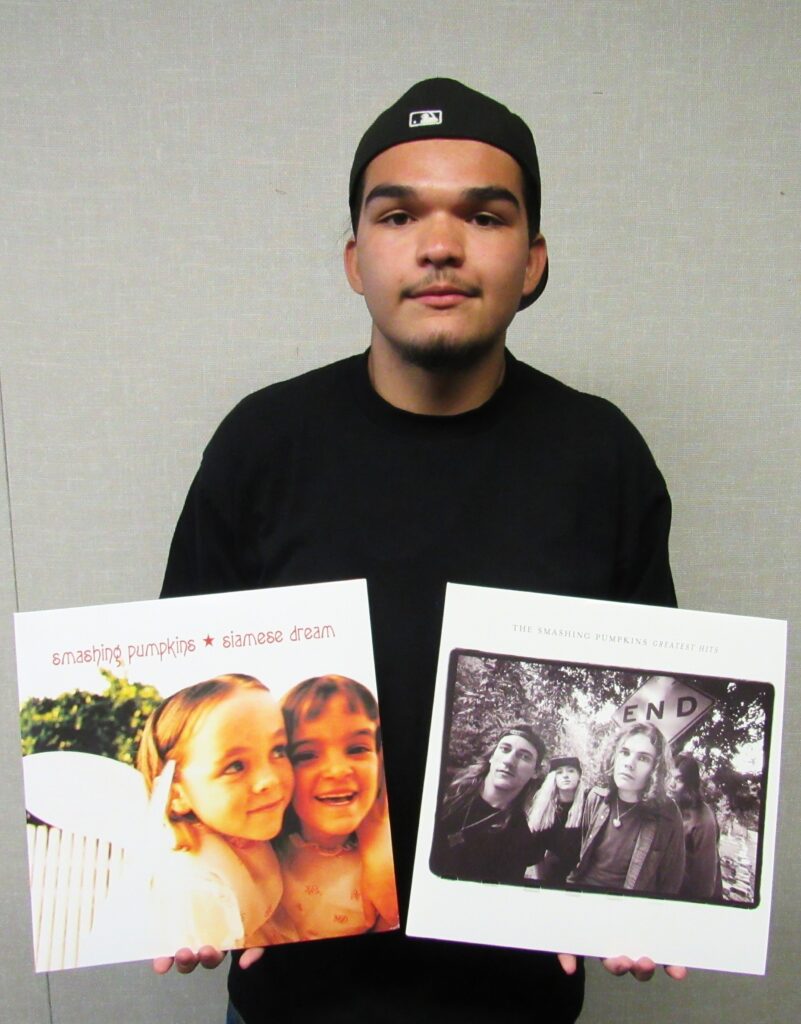
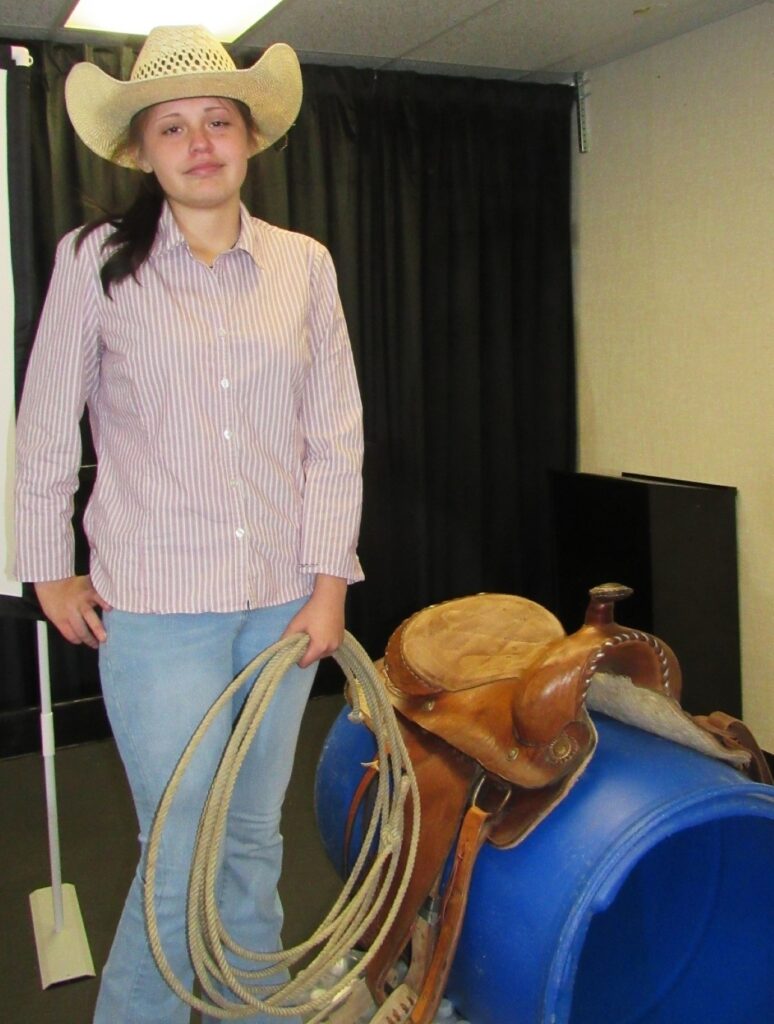
Seniors and their topics who presented on the first day were Selaya Snow Helms, Northern California Tribal Ceremonies; Shawna Rivera, Gun Violence in Native Communities; Francisco Lemus Jr., Creative Expression: Native American Expression; and Ronald Morillo III, Land Back: Soboba Water Rights. Day two was dedicated to Leland Razon, Billy Corgan; Sophia Resvaloso, Climate Change; Serena Hawk, The History of Rodeo; and Edgar Gladin Jr., The Game of Football.
Selaya shared that Tribal ceremonies have been crucial to Native American communities since time immemorial. She explored the significance of cultural ceremonies amongst the Hupa, Yurok, and Karuk Tribes of Northern California. She detailed the dances, gender roles, ecological significance, and the meaning behind regalia that is worn. Animals and feathers play a huge role in regalia; plants and shell materials are important, too. “Every piece has a purpose and carries meaning that goes far beyond what is seen on the surface,” Selaya shared. She brought examples of some of the items used in cultural ceremonies as well as photos of herself taken with family members after participation, since photos are not allowed to be taken during a ceremony itself.
Shawna said her topic choice was based on the fact her own family became part of the tragic narrative when her uncle became a victim of gun violence two years ago. In the 1600s, firearms were initially introduced to Indians as a tool for survival, conflict, or political power among other Native communities and colonists. In modern times, guns continue to shape the way communities interact and are used for safety, and to fuel conflicts and power struggles. Native youth struggle with suicide at twice the national average among youth ages 10-24 and firearms play a big role in these tragedies. “Raising awareness about gun violence is a way to protect more lives, preserve more culture, and support the future of Native communities,” Shawna explained.
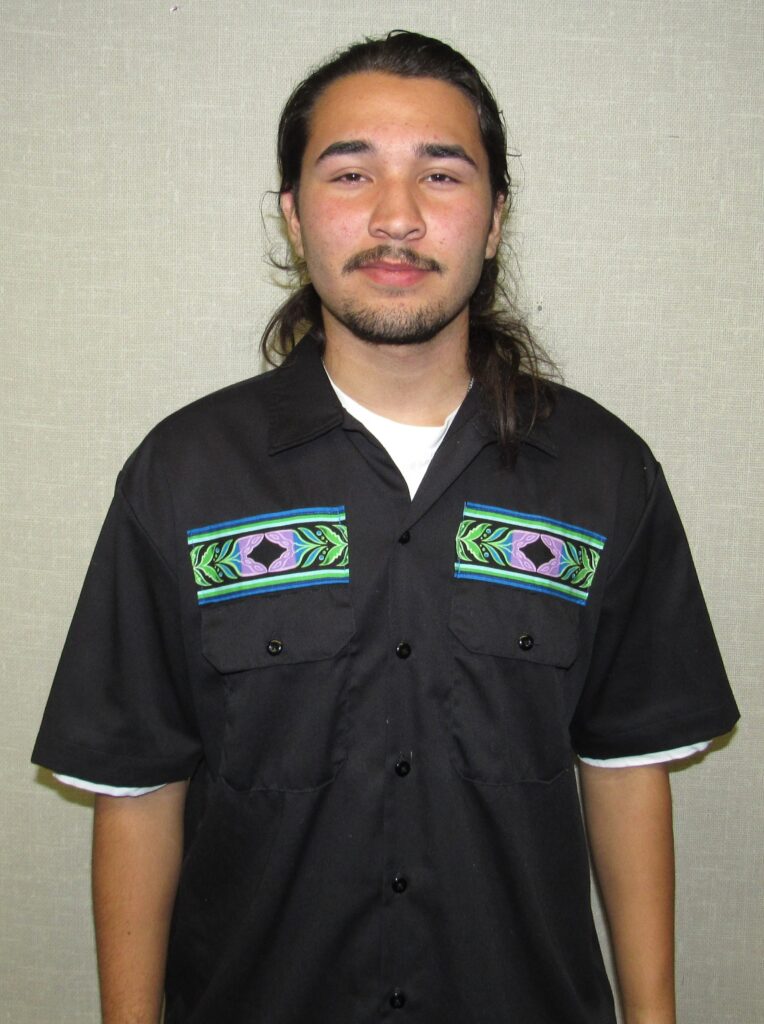
Francisco shared that creative expression is woven into our daily actions and choices and is not reserved to the arts, which is what most people think of when they hear the word creativity. “It’s what makes you unique and who you are,” he said. “There is no correct or wrong way to express yourself.” Because imagination fuels creativity, it can take many forms. Francisco discussed the work by Matika Wilber, a Native American photographer, whose Project 562 has become an unprecedented repository of imagery and oral histories from 562 federally recognized Tribes. Francisco wore a shirt that contained a specific colorful design that he created, and a friend helped him make. Each color has a specific meaning with a rainbow on the back to represent his family members.
Ronald explained that the term “Land Back” means to restore land and resources to its original intent. It is a movement to decolonize Indigenous people, which is not done without restoring the land itself; returning control back to the Native people and allowing them to start restoring their connection with the land. Through his research, Ronald found that the Soboba Band of Luiseño Indians fought from the 1930s to 2008 to regain water rights that were taken from them. Soboba’s story reflects the core message of the Land Back movement, and “their journey from dispossession to restoration stands as a powerful reminder that Indigenous resilience is ongoing, and respecting Native sovereignty is essential for a just and sustainable future.”
Leland is a music fan who shared the background of singer, songwriter and The Smashing Pumpkins frontman Billy Corgan. He explained that the influential musician blended his deeply personal lyricism and real-life pain into something meaningful, creating a unique and dynamic atmosphere. Behind all his success in the 1990s, Corgan was “just a kid from Chicago using music as an escape from the abuse and trauma of his childhood.” On December 2, 2000, The Smashing Pumpkins played their final show, a four-hour concert at the Cabaret Metro, the same place where the band played their first show 12 years earlier. Corgan branched out into writing a poetry book, launched the Madame ZuZu’s tea company, and continues to sell his band’s merchandise sporting his alter ego of “Zero.”
Sophia has a very personal reason for exploring the subject of climate change. She has fond memories of spending time with family and friends at the creek that runs through The Oaks and has been dubbed “Soboba Beach.” It is fed by a river that flows from the San Bernardino Mountains to the edge of the Soboba Reservation. In the past three years, she has noticed a decrease in water due to less rainfall and other factors. “Climate change doesn’t just affect people, but also impacts animals, plants and resources leading to food scarcity,” Sophia shared. She also detailed things that can be done to combat climate change and offered a link to a carbon footprint calculator to learn more.
Serena explained the origin of rodeos from cowboys working in the cattle industry saying the word comes from the Spanish word “rodear” which generally means “to round up” cattle. Her grandfather was a cowboy. She said evidence suggests the first official rodeo was created in Colorado in 1869. Serena shared some photos and information about the first ladies of rodeo, including Lucille Mulhall, whose skills at roping and riding gave her the very first title of “cowgirl.” Serena said those who have never been exposed to animals through ranch life or farming think that roping competitions are a form of animal cruelty. However, experienced ranchers and farmers deal with these animals daily and know just how tough and resilient they can be.
Edgar, who has played 8-man football for the Noli Braves, said the game has taught him many important life lessons and skills. One is to be kind to teammates since it’s a team sport. “At the end of the day, it’s a game so you want to have fun,” he said. Playing the game takes commitment to strict schedules, healthy eating habits, and good sleep routines. Edgar shared the early beginnings of the game, the birth of professional football, and rules and varieties of the sport. He also delved into the life of Lamar Jackson who is widely regarded as one of the greatest dual-threat quarterbacks in league history. He is a two-time NFL Most Valuable Player and the NFL’s all-time leader in quarterback rushing yards.
The seniors did very well with their presentations and were comfortable and knowledgeable when answering questions that were posed to them. Noli Indian School’s graduation ceremony is scheduled for June 4 at the Soboba Casino Resort Event Center.




