
Gavin Newsom’s last budget still would leave California’s finances wobbly

Date:

A printed paper copy titled “May Revision 2026-27, Gavin Newsom, Governor, State of California,” featuring a photo of the state capitol building on the cover.

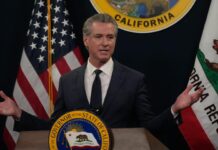
Last week Gov. Gavin Newsom proposed a revised version of his eighth and final state budget, which he said would not only be balanced for the 2026-27 fiscal year but also for his successor’s first year.

“I’m not trying to get out of Dodge,” Newsom said. “This is a balanced budget structurally for the next 18 months after I’m gone.”

On Monday, the Legislature’s budget analyst, Gabe Petek, said Newsom accomplished that with the use of one-time resources, such as reserves, and other budgetary maneuvers that will continue the “structural deficit” that has plagued the state for the last four years.

“A budget is structurally balanced when revenues collected in a given fiscal year are sufficient to cover expenditures planned for that same year,” Petek’s analysis says. “On this basis, the administration’s estimates show operating deficits of roughly $10 billion annually from 2026‑27 through 2029‑30 (and) beginning in 2027-28 these deficits represent the ongoing gap that would need to be addressed in future budgets.”

In other words, if Newsom’s final budget is enacted, he could walk out the door next January — and presumably begin his 2028 campaign for president — while claiming to have solved the problem that he caused in 2022.

However, in reality California’s fiscal dilemma will continue.

For those who don’t recall, Newsom loudly proclaimed in 2022 that the state had a $97.5 billion surplus based on an expansive, multi-year revenue projection that turned out to be a mirage. The administration later acknowledged it had overestimated revenues by $165 billion, but by then Newsom and the Legislature had ramped up spending that could not be covered by real revenues.

The structural deficit — an ongoing gap between income and outgo — has existed ever since, totaling $125 billion, according to Petek. While the newly revised budget would be balanced on paper, Petek is saying, the maneuvers to achieve that are temporary rather than permanent, so the underlying imbalance continues, albeit somewhat smaller than previous estimates.

Petek also notes that one way Newsom achieves short-term balance is by tapping into the state’s emergency reserves, both through transfers from the current reserve funds and deferrals of mandatory deposits into those funds — thus contributing to what Petek terms “a wall of debt” that has been amassed during the years of deficit spending.

Reserves, under Newsom’s revised budget, would shrink from $47.2 billion a year ago to $19.5 billion by June 2027.

The term “wall of debt” harkens back to Newsom’s predecessor, Jerry Brown, who used it to describe what he confronted as he began his second stint as governor in 2011. Brown cleaned up that debt and left Newsom a healthy balance sheet eight years later. Newsom wants to end his governorship on the same fiscal high note, but Petek is saying, in essence, that’s an illusion.

Petek suggests a series of amendments that would truly put the state’s finances in order but says they would cost $24 billion in either reduced spending or increased revenues and concludes, “The state’s current fiscal situation is genuinely unprecedented. Despite booming revenues, the budget position is overextended, reflecting: a structurally higher spending base, diminished reserves, an already accumulated wall of debt, and an operating deficit.”

He also warns that “a revenue shock could be coming, as the state’s revenue outlook rests disproportionately on AI‑driven equity valuations that are trading at highs last seen at the peak of the dot‑com bubble.”

There’s still another aspect to the analyst’s somewhat gloomy scenario — legislators are being besieged by demands from advocacy groups that they reject the spending reductions in Newsom’s budget, especially in healthcare, and increase outlays, even if that requires increasing taxes.

It is, to use another phrase from the inimitable Jerry Brown, a “yeasty situation.”

LEAVE A REPLY

Please enter your comment!
Please enter your name here

Share post:

Subscribe to The Hemet & San Jacinto Chronicle

Popular

More like this
Related

Moving to California with a gun? You might have to take a four-hour course

A person wearing ear protection and tinted safety glasses aims a handgun at an outdoor shooting range while another person stands closely behind, appearing to offer instruction. Bags and equipment rest on a wooden bench beside them, with hillside terrain blurred in the background.

In summary

Want to buy a gun in California? Lawmakers may have you set aside four hours — and bring ammo for the range

Californians would have to take a four-hour course with live-fire training to buy a gun if a bill advancing through the Legislature gets signed into law.

Senate Bill 948, by Berkeley Democratic Sen. Jesse Arreguín, also would require gun owners moving to California to obtain a firearm safety certificate and register their firearms within 180 days of their arrival. Beginning in 2028, obtaining that certificate would require completing the training.

It’s the latest effort by California Democrats to add more restrictions on firearm ownership in a state that already has some of the toughest gun laws in the country. However, it’s hardly certain the bill will become law. A similar measure died in the Legislature last year.

This year’s proposal advanced from the Senate Appropriations Committee Thursday on a party-line vote with Republicans opposed. Committee members offered no comment on the measure and did not take any public testimony, which is typical for that committee.

But in March, when an earlier version of the bill would have required eight hours of training, Arreguín told the Senate Public Safety Committee the proposed training requirements would reduce gun violence and prevent accidental shootings.

“Firearm safety is essential in preventing firearm-related incidents, especially those involving children,” he said. “By strengthening training requirements and closing gaps in current law, SB 948 will ensure responsible gun ownership to keep Californians and communities safe.”

Rebecca Marcus, a lobbyist for the Brady Campaign, told the committee there were more than 69,000 shootings resulting in death or requiring urgent medical care in California from 2016 to 2021. Around one in three of those shootings were accidental, she said. Many involved children.

Gun rights advocates said the bill would be challenged in court if it becomes law. 

Adam Wilson of Gun Owners of California called the proposed requirements “an insurmountable barrier to exercising a constitutional right.”

Clay Kimberling, a lobbyist for the National Rifle Association’s Institute for Legislative Action, said that’s especially true for the estimated 115,000 gun owners who move to California each year.

“Whether they move into the state on a new job, a new military assignment, or family obligations such as helping a sick or elderly family member, lawful firearm owners would now have to search out an instructor, pay for the class … and take eight hours out of their day … for simply wanting to continue to practice their constitutional right to keep and bear arms in a new state,” Kimberling said.

That original version of the bill also would have required new California arrivals to register firearms and take the course within 60 days. 

Will the bill make it to Newsom?

Under current law, Californians are required to pass a written test and pay $25 to obtain a five-year firearm safety certificate to purchase a gun, but no formal training course is required.

Licensed hunters are required to take a mandatory hunting-safety course and aren’t required to get a certificate when buying rifles or shotguns. Also exempt are those who’ve obtained a concealed weapons permit, which is issued after 16 hours of mandatory training that includes live-fire at a gun range.

Those exemptions would still apply.

For everyone else, the proposed four hours of training would include coursework on state and federal gun laws, secure firearm storage, safe handling, the dangers of guns, use-of-force laws, how to sell firearms legally and conflict resolution. The live-fire portion of the course would need to last at least an hour.

Second Amendment groups say paying a Department of Justice-certified firearms instructor would add at least $400 to the cost of buying a firearm. Applicants also would have to pay for ammunition, gun rentals and range fees. Fees and firearms taxes already can add more than $100 to the cost of a firearm in California. 

The training requirements would take effect July 1, 2028.

Until then, beginning on Jan. 1, gun owners moving to the state would be required to pass the current written test and register their firearms with the Department of Justice within 180 days.

Violating the proposed law would be a misdemeanor.

The bill now moves to the full Senate. It will then have to advance through the Assembly by this summer if Gov. Gavin Newsom is to sign it. He hasn’t taken a position on the legislation.

Last year, a bill with eight-hour training requirements died in the Assembly Appropriations Committee.

$6 gas intensifies clash between climate and cost of living

For many Californians, unseasonal winds and grass fires in...

‘OnlyFans’ comment about high schoolers in Speedos ignites controversy

An Inland Empire high school water polo player’s mother...

Moving to California with a gun? You might have to take a four-hour course

In summary Want to buy a gun in California? Lawmakers...