Does that influencer really like Tom Steyer?

Date:

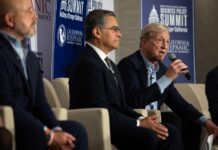
A person wearing a dark blue blazer sits on a stage as they hold and speak into the a microphone while looking off to the side. A blue backdrop with partially visible text can be seen in the background.
Tom Steyer speaks during a gubernatorial forum at the Sheraton Grand Sacramento Hotel in Sacramento on April 14, 2026. Photo by Miguel Gutierrez Jr., CalMatters

It can start subtly enough: One day a social media influencer you follow — the one who talks about politics, recommends beauty products or shares internet memes — posts a TikTok or Instagram Reel saying they like a candidate for California governor. 

You don’t think much of it and you go on doomscrolling. But what you don’t know is that the influencer may have been paid — potentially tens of thousands of dollars — to post that video.

As CalMatters reports, it’s a practice that billionaire environmental activist Tom Steyer is catching heat for in the lead up to the June primary. As part of the most expensive primary campaign in state history, Steyer has paid over $123,400 to at least eight influencers, according to campaign finance filings. His campaign is also paying over $870,000 to a digital media agency that solicits creators to post daily videos about Steyer.

One influencer, Jaz Roche, has posted content that boosts Steyer (or criticizes his main Democratic opponent, Xavier Becerra) 34 times in the past 10 days. On one of Roche’s affiliated accounts, she describes herself as a “so-cal girlypop.” Yet Roche states she’s based in Pennsylvania.

It’s also not always clear to viewers that influencers are being paid for making campaign content. CalMatters reached out to nearly a dozen creators listed in Steyer’s filings whom his campaign paid between $1,500 and $10,000 to post videos. Only one of them labeled their video a “paid partnership.”

Regulators have launched a probe into one of the Steyer influencer videos, in one of the first tests of a 2023 state law requiring influencers to disclose in their posts if they’re being paid by a political campaign.

Kevin Liao, a spokesperson for Steyer, said the campaign is satisfying its legal obligations under the law. And when asked why the campaign had paid some out-of-state influencers for content, Liao replied, “I don’t see why that’s an issue.”

Read more.


The Ideas Festival agenda is set and it’s packed. Hear from The Lincoln Project founders, Janet Napolitano, Julian Castro, Dan Walters and more. Join us in Sacramento Thursday for a day of big ideas, smart conversations and connection. Get your tickets today.


Other Stories You Should Know


What are they trying to hide?

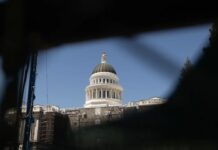
An overhead view shows three people standing and talking on a patterned tile floor inside an ornate building. Decorative light fixtures with glowing bulbs hang between wooden railings, casting warm light over the geometric floor tiles as the group gathers near the edge of a balcony.
State Sen. Angelique Ashby, wearing a red blazer, talks with lobbyists at the state Capitol in Sacramento on Sept. 12, 2025. Photo by Fred Greaves for CalMatters

Chances are slim that lawmakers will make it easier for Californians to find out what lobbyists are telling them after the Assembly denied hearings to two open government bills, writes CalMatters’ Ryan Sabalow.

The bills, one drafted by a Democrat and the other by a Republican, would make the formal letters lobbyists write to lawmakers more accessible to Californians by requiring them to be posted online. They’re a window into what businesses, advocacy groups and unions are thinking as bills move through the Capitol.

But Assemblymember Blanca Pacheco, a Downey Democrat and the head of the Assembly Rules Committee who would have to approve the measures for them to advance, says she is interested in making the information more accessible, “without requiring legislation.”

Read more.

Speaking of bills: Ryan also reports on another bill, this one before the Senate, which gun rights advocates say they are poised to challenge if it becomes law. The proposal would require Californians who want to own a gun to take a four-hour training course. Proponents argue that the bill would reduce gun violence, but lawmakers killed a similar measure last year. Read more.

Voter ID ‘red meat’ for GOP base

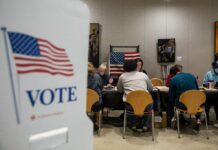
Election workers sit behind a table as they check in people sitting in front of them. A voting booth with the word "Vote" and the U.S. flag can be seen in the foreground.
Election workers check in voters at a vote center at the Mission Valley Library in San Diego on Nov. 5, 2024. Photo by Adriana Heldiz, CalMatters

Republican state legislators are lined up behind a ballot initiative that would require Californians to show proof of citizenship in order to vote, writes CalMatters’ Nadia Lathan.

Assemblymember Carl DeMaio, a San Diego Republican who is leading the voter ID campaign, says that the practice protects election integrity.

He cites polling that shows 56% of California voters support voter ID. But that support drops to 39% when voters are told the ballot measure is backed by DeMaio and could suppress turnout, particularly among people of color. 

But despite the wavering public support and the fact that voter fraud is exceedingly rare, hammering on voter ID is “traditional Republican messaging,” said Rob Stutzman, a GOP political consultant. Having it on the ballot could potentially fire up the party’s base in what will likely be a tough election year for Republicans.

  • Stutzman: “Issues like this, that are kind of red meat issues for Republicans when the governor’s race is fairly lackluster, it helps. … It’s not going to hurt Republicans to have this on the ballot.”

Read more.


Other things worth your time:

Some stories may require a subscription to read.


Legislature’s fiscal analyst says CA ‘ill‑prepared’ under Newsom budget // The Sacramento Bee

In deep blue CA, Dems find a villain toxic enough to rival Trump: The power company // Politico

Jury hands victory to Sam Altman and OpenAI in battle with Elon Musk // The Guardian

Crypto billionaires bankroll $500K for anti-Elward ads in North Bay Assembly race // The Press Democrat

SF moves ahead with plan for public bank // San Francisco Chronicle

Federal agents raid homes of Ventura County immigration activists // Los Angeles Times

2026 World Cup set to become ‘most polluting’ games ever // Los Angeles Times

LA County to end ban on rent gouging, 16 months after fires created rental market chaos // LAist

Teens suspected in mosque shooting met online, where they were radicalized, FBI says // The San Diego Union-Tribune


LEAVE A REPLY

Please enter your comment!
Please enter your name here

Share post:

Subscribe to The Hemet & San Jacinto Chronicle

Popular

More like this
Related

Even while courting moderates on voter ID, GOP leaders still push debunked fraud narrative

Election workers sit behind a table as they check in people sitting in front of them. A voting booth with the word

In summary

While GOP lawmakers try to convince moderates that a voter ID requirement is a “common sense” idea, they continue to push President Donald Trump’s debunked fraud narrative.

With President Donald Trump dragging them down in the polls, California Republicans are repackaging one of his core crusades into an idea they hope will be more palatable to voters.

They are framing their successful push to get a voter ID law on the November ballot as a “common sense” measure.

“We’ve structured this initiative based on what voters across the political spectrum would want,” Republican Assemblymember Carl DeMaio of San Diego said in a March interview, adding that showing an ID at the polls shouldn’t be any different than using one to buy alcohol or pass airport security.

DeMaio and other backers point to polling that shows 56% of California voters support requiring ID at the ballot box and that most states require or recommend an ID to vote. 

But even in their pursuit to appeal to moderates, GOP lawmakers haven’t given up pushing Trump’s debunked claims of widespread voter fraud. 

Last month, GOP legislators held a “stop the fraud” press conference, where they alleged without proof rampant corruption across state government, from elections to homelessness programs, and urged Newsom to call a special session to “audit” the alleged fraud. 

The polling they point to also shows, however, that support for requiring identification at the polls drops to 39% when voters are told it is backed by DeMaio and could suppress turnout.

Voting rights groups say the measure would create needless barriers and would stifle turnout among low-income and disabled voters.

Current law already requires counties to routinely review voter registration databases to remove anyone who is ineligible to vote in case of a move, incarceration or death.

“Those checks and that maintenance of that list is already happening,” League of Women Voters executive director Jenny Farrell said. “We don’t need to erect new barriers.”

Voter suppression concerns tank voter ID support

If passed, as many as 1 million eligible voters could be kept from voting. Another 500,000 aren’t registered and don’t have the necessary documents it would require, according to UCLA Voting Rights Project director Matt Barreto.

“There’s been a very consistent finding in almost any state, in any environment, that lower-income and working-class voters are less likely to have an updated, valid ID,” he said.

Labor groups who bankrolled Democrats’ campaign for last year’s redistricting proposal, Proposition 50, are funding a similar opposition campaign focused on Trump’s push for a proof-of-citizenship bill in Congress.

Meanwhile, Democrats want to increase penalties for violating election laws after Riverside County Sheriff Chad Bianco, a candidate for governor, seized hundreds of thousands of ballots earlier this year over baseless claims of voter fraud in the 2025 election.

Bianco, who seized the ballots in response to unproven claims from a right-wing activist group, supports voter ID.

Critics say he’s stoking fear among voters and that there are already adequate safeguards.

“We have a two-person rule where no ballots are ever in an area that’s not with at least two people observing what’s happening,” said Gail Pellerin, Democratic chair of the Assembly elections committee, at a UCLA elections panel last month.

Ramping up the base?

Experts agree voter fraud is rare.

However, fears about election integrity have risen among Republicans since Trump falsely claimed the 2020 election was stolen, spurring GOP lawmakers across the country to introduce bills seeking to tighten voter restrictions.

This is DeMaio’s third attempt at a voter ID ballot initiative. It qualified for the ballot last month.

A lawmaker, wearing a black suit with a striped yellow tie, stands behind a lectern while surrounded by people holding blue and yellow signs that say
Assemblymember Carl DeMaio announces that supporters of the CA Voter ID Initiative will submit more than 1.3 million signatures to qualify the measure for the November 2026 ballot during a press conference at the west steps of the state Capitol in Sacramento on March 3, 2026. Photo by Fred Greaves for CalMatters

Strategists say there’s little evidence that ballot initiatives actually turn out voters, but this measure is something intended to activate voters in what will likely be a difficult election year for Republicans.

“Issues like this, that are kind of red meat issues for Republicans when the governor’s race is fairly lackluster, it helps,” Stutzman said. “It’s all upside. It’s not going to hurt Republicans to have this on the ballot.”

Following bruising losses after Prop. 50 and in other states, GOP leaders are hoping to hold onto three statehouse seats they flipped in 2024 and gain others. But Trump — and his push for national voter restrictions — threatens Republicans’ success at the ballot box.

“It’s a loop that Republicans keep hammering on, either fraud or ineptitude, or waste in dollars,” Stutzman said. “It’s kind of traditional Republican messaging.”

For the Record: An earlier version misstated GOP lawmakers’ call for Gov. Gavin Newsom to call a special session on alleged fraud.

How California’s Voter Guide published a candidate’s antisemitic conspiracy theories

Guest Commentary written by Reuven Taff Reuven Taff is past...

What are they trying to hide? California lawmakers kill lobbying transparency bills

In summary Good government groups backed legislation that sought to...